
A transformer can have enough kVA and still prevent a Sungrow inverter from synchronising, exporting power, or passing utility inspection. By checking the inverter-side voltage, transformer nameplate, PCC requirements, thermal loading, protection scheme, and commissioning tests in the right order, you can identify a workable transformer before procurement.
Key takeaways
- Specify transformer requirements from the PCC back to the Sungrow inverter.
- Match voltage, frequency, phase sequence, vector group and earthing method.
- Size capacity for inverter output, reactive power and continuous operating conditions.
- Complete protection, insulation, phasing and no-load tests before energisation.
What transformer compatibility means at a Pune solar grid connection
Transformer compatibility means the Sungrow inverter, transformer and utility grid share the correct voltage, frequency, phase arrangement, earthing method and protection design. For sungrow solar on grid inverter transformer compatibility in pune, specify backward from the point of common coupling (PCC), not from the inverter alone.
Confirm the MSEDCL or MSETCL-approved interconnection voltage, metering location, permitted export capacity and interface-protection scheme before choosing the transformer ratio. The transformer’s low-voltage line-to-line winding must remain within the exact Sungrow model’s AC operating range and maximum voltage; its high-voltage winding must match the approved grid connection.
Check these electrical interfaces before procurement:
- Match the inverter’s 50 Hz requirement, phase sequence, phase count and allowable voltage imbalance.
- Confirm the transformer vector group, neutral availability and earthing arrangement against the inverter manual and utility drawings.
- Record rated current, maximum apparent power, power-factor range and transformer percentage impedance; kVA alone does not prove compatibility.
- Coordinate LV breakers, MV relays, fuses and transformer protection using Sungrow’s short-circuit data. An inverter is a controlled electronic source, not a synchronous generator with unlimited fault current.
- Energise and stabilise the transformer first, verify voltage, phase sequence, insulation and earthing, then close the inverter AC connection and enable generation.
- Treat anti-islanding as only one function. Utility-approved loss-of-mains, voltage and frequency protection, visible isolation, interlocking and an accessible disconnect may still be required.
How to read the transformer nameplate and size capacity correctly
A transformer’s kVA is not automatically its safe solar-export capacity. Calculate inverter apparent power first: kVA = maximum kW ÷ power factor. Then apply the transformer’s continuous-load limit after correcting for Pune ambient temperature, enclosure ventilation, installation altitude, harmonic-current heating and any export-limiting setting. A generic 1.25 multiplier cannot replace this calculation.
| Nameplate item | What to check | Why it matters |
|---|---|---|
| Secondary voltage and frequency | Match the Sungrow model’s AC range, maximum voltage and 50 Hz requirement | Excess voltage can trip the inverter; wrong voltage increases heating |
| Primary voltage and tap range | Match the approved MSEDCL or MSETCL interconnection voltage | Tap position controls PCC voltage and export voltage rise |
| Percentage impedance | Use it to calculate voltage rise and short-circuit current | High impedance raises voltage during export; low impedance raises fault duty |
| Vector group and neutral | Confirm phase displacement, neutral treatment and earthing path | A mismatch can cause relay errors, nuisance trips or harmful zero-sequence current |
| Cooling, insulation and withstand rating | Check ONAN or other cooling class, insulation level and short-circuit withstand | These determine thermal headroom and fault survival |
For one inverter, calculate full-load current as I = kVA ÷ (√3 × line voltage). Estimate transformer-side voltage rise from current multiplied by impedance, then verify the result against the inverter limit and the utility PCC limit during low site load. Include future expansion separately.
- Confirm the approved export capacity, metering point and protection scheme before choosing the ratio.
- Check capacitor banks for resonance; fixed correction can overvolt a lightly loaded solar bus.
- Treat commercial inverter compatibility in Pune as a nameplate, thermal and grid-interface calculation—not a kVA match.
When one transformer can serve several Sungrow inverters
Several Sungrow inverters can share one transformer when their combined export, voltage ratio, vector group, impedance, and protection settings suit the PCC. For solar on grid inverter transformers, design from the MSEDCL or MSETCL-approved connection point backward, not from the inverter count alone.
- Group inverters by balanced phase loading and cable distance. Give each group an LV feeder with its own isolator, breaker, metering, and cable fault protection.
- Size the transformer for the combined continuous kVA after applying power factor, temperature, ventilation, harmonics, and planned export limiting. Do not add inverter kW and apply a generic multiplier.
- Use one common LV bus and one defined MV coupling point when the utility requires coordinated export and protection. Separate transformers need separate protection unless the approved scheme permits parallel operation.
- Parallel transformers only when their voltage ratio, tap position, vector group, frequency, polarity, percentage impedance, and phase sequence match. Unequal impedance causes circulating current and uneven loading before the inverters reach full output.
Treat the inverter fault contribution as controlled electronic current, not synchronous-generator fault current. Obtain Sungrow short-circuit data and coordinate LV breakers, MV relays, fuses, transformer differential or restricted-earth-fault protection, and surge protection against those limits.
Check capacitor banks through a harmonic and resonance study. A fixed motor-load capacitor bank can resonate with transformer leakage and inverter controls during high solar output and low site demand.
Energize and stabilize the transformer first; verify phase sequence, voltage, insulation, and earthing before closing inverter AC feeders and enabling generation. This separates transformer inrush trips from inverter or grid faults.
The field symptoms and root causes of transformer mismatch
A trip at the instant the transformer is energised points to magnetising inrush, incorrect tap selection, or a protection setting that mistakes inrush for a fault. A trip only when export begins points more strongly to excessive secondary voltage rise, wrong ratio, high impedance, phase imbalance, or an earthing mismatch.
Use the location and timing of the disturbance to separate causes:
- Voltage high at the inverter terminals but normal at the PCC: check the transformer ratio, tap position, cable drop, and inverter-side connections.
- Voltage, frequency, or phase sequence abnormal at both points: investigate the MSEDCL/MSETCL supply, upstream feeder, or PCC protection.
- The same Sungrow inverter trips on a verified compatible supply: inspect inverter settings, firmware, AC terminals, and internal protection.
- Several inverters trip together after a transformer breaker closes: check inrush, transformer protection coordination, vector group, and grounding before replacing inverters.
- One phase shows persistent voltage or current imbalance: test winding resistance, phase connections, neutral treatment, and cable termination.
- Heating, audible hum, or repeated overload with balanced current: compare measured harmonics, cooling conditions, tap position, and transformer impedance with the nameplate.
Record inverter event codes alongside three-phase voltage, current, frequency, power factor, and waveform captures at the inverter and PCC. Stop repeated breaker cycling: it can turn a clear Sungrow inverter transformer issues investigation into overlapping inrush, grid-quality, and reconnection alarms.
The pre-energisation checklist for a Pune commercial solar plant
Treat sungrow solar on grid inverter transformer compatibility in Pune as a PCC approval exercise, not only an inverter purchase. Confirm the MSEDCL or MSETCL interconnection voltage, permitted export, metering point, protection scheme, and utility-accessible isolator before approving the transformer ratio. This is the foundation of commercial inverter compatibility in Pune.
1. Collect the approved single-line diagram, transformer datasheet, Sungrow model datasheet and installation manual, protection-coordination study, earthing layout, relay settings, test certificates, and utility approval letter.
2. Check the transformer’s kVA, LV and HV voltages, frequency, phase sequence, vector group, tap position, percentage impedance, neutral connection, and short-circuit withstand rating against the exact inverter model.
3. Test transformer insulation resistance, winding resistance, turns ratio, polarity, phase sequence, earth continuity, and protective-device operation. Verify inverter AC voltage, frequency, phase arrangement, earthing, and voltage imbalance at the terminals.
4. Load the approved inverter settings: voltage and frequency limits, power-factor or reactive-power mode, ramp rate, reconnection delay, anti-islanding function, and utility-required loss-of-mains protection. Coordinate LV breakers, MV relays, fuses, differential protection, and inrush restraint with Sungrow fault-current data.
5. Energise the transformer with the inverter AC breaker open. Confirm stable secondary voltage, phase sequence, relay status, and absence of abnormal sound or heating.
6. Close the inverter AC connection, power up controls, confirm no alarms, then enable generation. Do not repeatedly cycle the MV breaker during reconnection; inrush and delayed grid checks can mimic an inverter fault.
Have Celestial Renewexperts LLP record these readings in the commissioning dossier if it is supplying the inverter array.
Related products
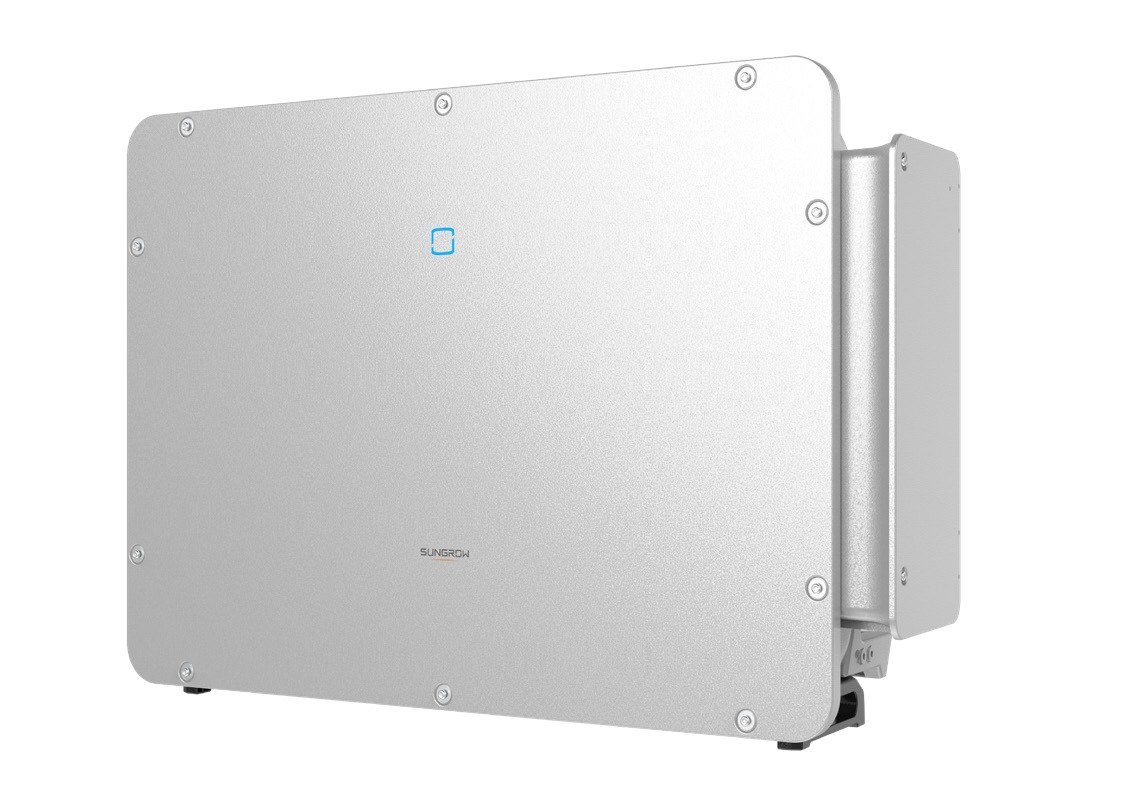 | Solar PV Inverter 75kW Multi-MPPT String Inverter Engineered for large-scale commercial and industrial solar installations, the SG75CX-P2 delivers exceptional energy... View product → |
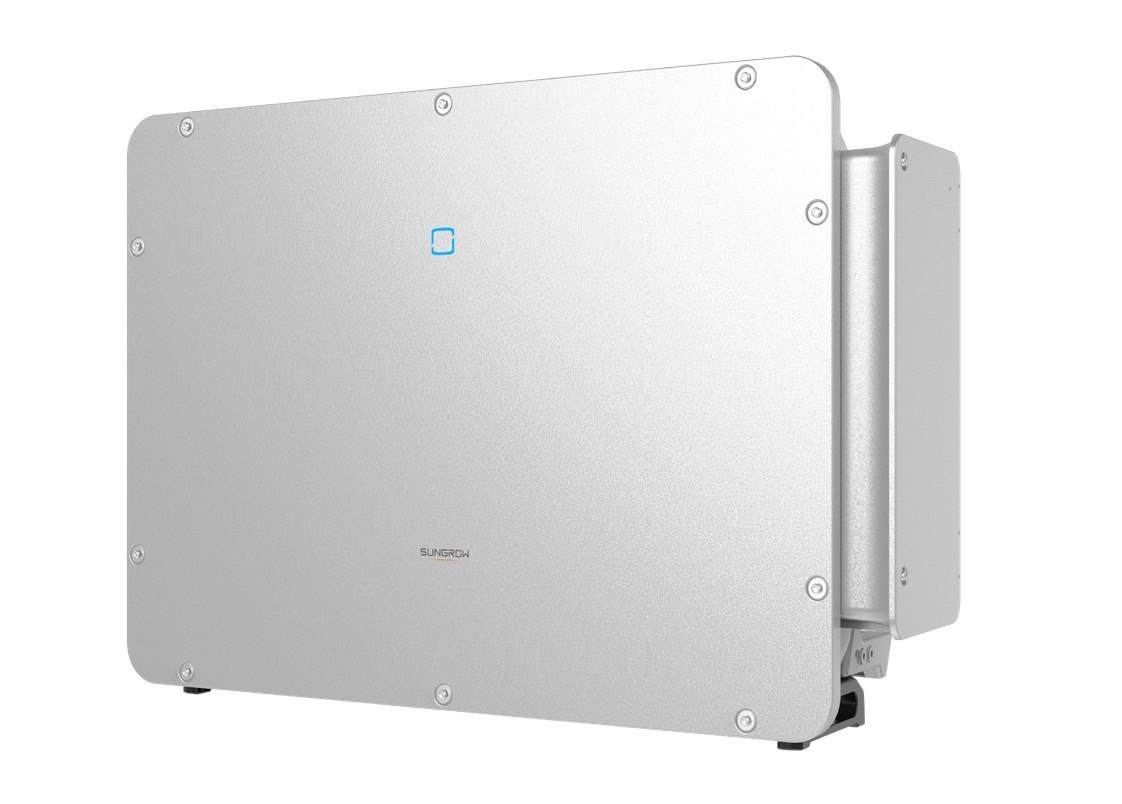 | Solar PV Inverter ungrow SG150CX — 150kW Multi-MPPT String Inverter Engineered for large-scale commercial and industrial solar installations, the SG150CX delivers... View product → |
Frequently asked questions
What does transformer compatibility mean for a Sungrow inverter in Pune?
It means the inverter, transformer and grid match in voltage, frequency, phase arrangement, earthing method, vector group and protection settings at the point of common coupling.
How do you check a transformer’s capacity for a Sungrow inverter?
Read the nameplate kVA rating, primary and secondary voltages, vector group, impedance, frequency and tap range, then compare them with the inverter’s maximum AC output and the site’s operating conditions.
Can one transformer serve several Sungrow inverters?
Yes, when its kVA rating, voltage ratio, impedance, winding arrangement, protection and cable design support the combined inverter output and the utility connection requirements.
What symptoms indicate a Sungrow inverter transformer mismatch?
Common signs include repeated inverter trips, overvoltage or undervoltage alarms, excessive voltage distortion, unbalanced currents, abnormal heating, nuisance protection operation and failure to synchronise.
What must be checked before energising a Pune commercial solar plant?
Verify nameplate data, cable termination, phase sequence, insulation resistance, transformer ratio, earthing continuity, protection settings, interlocks, utility approvals and inverter commissioning records.
Related products
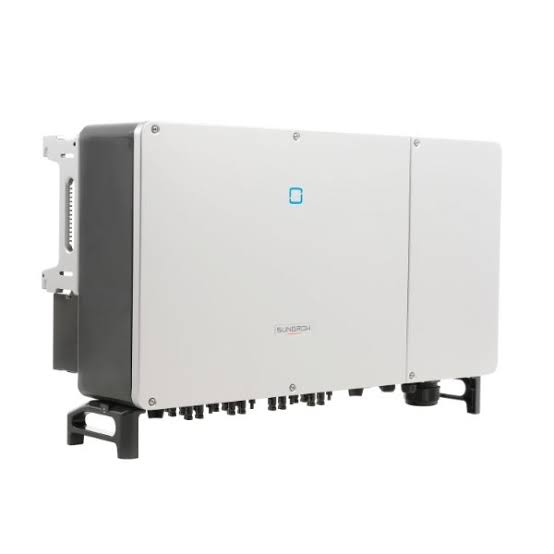 | Solar PV Inverter Multi-MPPT String Inverter Engineered for large-scale commercial and industrial solar installations, the SG110CX delivers exceptional energy yield... View product → |
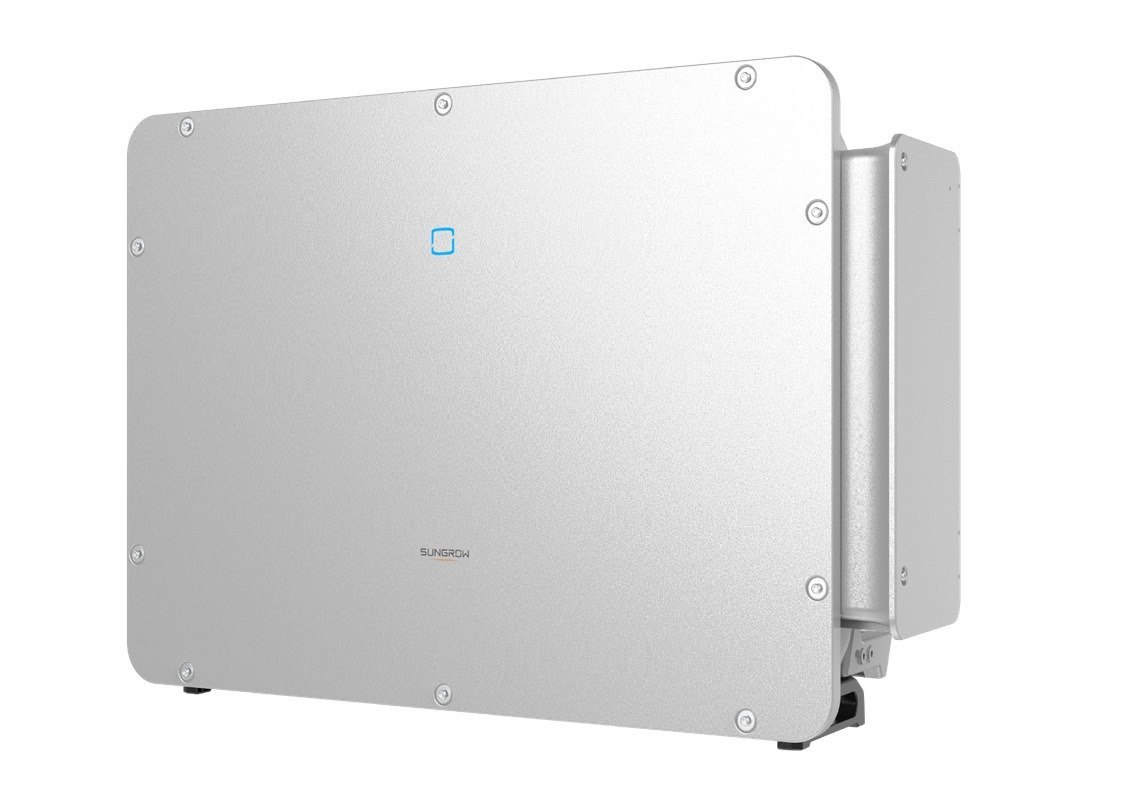 | Solar PV Inverter 125kW Multi-MPPT String Inverter Engineered for large-scale commercial and industrial solar installations, the SG125CX-P2 delivers exceptional energy... View product → |
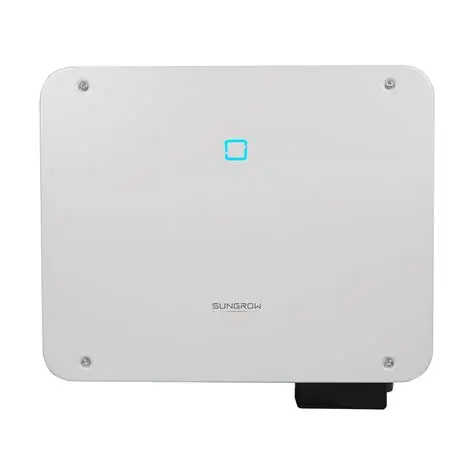 | Solar PV Inverter Sungrow 50 KW Solar PV inverter. A very robust product for commercial and industrial. View product → |
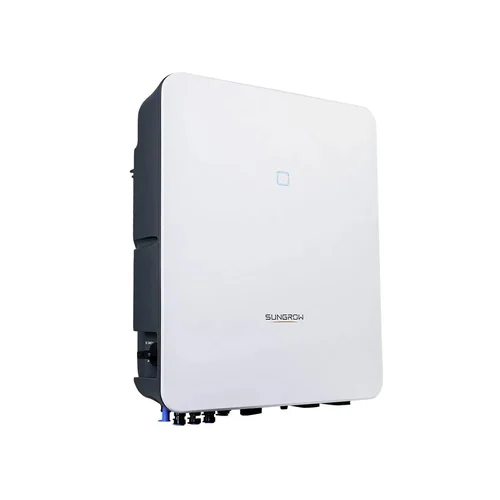 | Solar PV Inverter Sungrow 10 KW Solar PV inverter. A very robust product for commercial purposes. View product → |