
An on-grid inverter turns the DC electricity from photovoltaic panels into AC electricity that matches the utility grid, then stops energising the circuit when that grid is unavailable. You will be able to trace the equipment path, determine whether your Pune project needs a transformer, and compare the electrical details that decide whether the system will operate safely.
Key takeaways
- An on-grid inverter converts panel DC into utility-synchronised AC.
- It cannot provide backup power during a grid outage without additional equipment.
- Use a transformer when the inverter output voltage does not match the utility connection.
- Check voltage, frequency, phase, kVA, harmonics and protection settings before procurement.
What an On-Grid Inverter Does—and What It Does Not Do
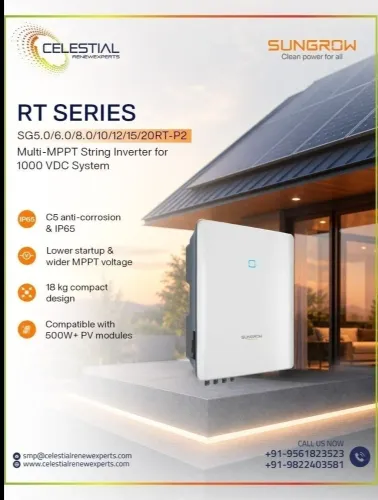
An on-grid inverter is a grid-following power-conversion device: it takes photovoltaic DC electricity, uses maximum power point tracking (MPPT) to extract the available energy, and synthesises AC matched to the utility’s voltage, frequency and phase.
Its anti-islanding function is a safety control, not a convenience. If utility voltage or frequency leaves the permitted window, or the supply fails, the inverter must stop energising the circuit so an isolated feeder does not remain unintentionally live.
For a solar on grid inverter explained plainly, compare these devices:
- On-grid inverter: converts PV DC to grid-synchronised AC and normally shuts down during an outage.
- Off-grid inverter: creates its own AC supply from batteries or another DC source without relying on a utility waveform.
- Hybrid inverter: combines grid operation with battery charging and backup output through dedicated controls and storage.
- Solar charge controller: regulates PV charging into a battery; it does not directly produce utility-synchronised AC.
- Transformer: changes one AC voltage to another. It does not convert PV DC or replace the inverter.
That distinction answers the practical search question what is a solar on grid inverter transformers in pune: the inverter makes usable, synchronised AC, while a transformer steps that AC up or down when the project voltage requires it.
An ordinary on-grid inverter cannot keep your lights running during a grid outage unless a separately designed backup system provides an isolated supply.
How Solar Power Travels from the Panels to the Utility Connection
A PV string combines modules in series to produce DC, and several strings enter DC combiner equipment for fusing, isolation and surge protection. The combined DC feeds a string inverter, which converts it into grid-synchronised AC.
- The inverter output passes through an AC isolator, circuit-breaker protection and surge protection.
- Outputs from several low-voltage inverters can enter an AC combiner or LT switchboard, where feeders meet on common busbars.
- The LT feeder connects to the transformer’s LV winding. The transformer changes the inverter’s AC voltage, not PV DC.
- Voltage leaves through the transformer’s HV winding and enters HT switchgear for isolation, switching and protection.
- CTs, PTs or metering transformers feed the approved energy meter, which records import and export at the MSEDCL or other utility interconnection point.
That is the usual solar inverter and transformer connection: multiple inverter outputs can be collected at low voltage before one transformer steps them up to the approved HT connection.
Keep the calculations separate. For PV strings and DC combiners, use each module’s short-circuit current, temperature correction, string voltage and the inverter’s permitted DC voltage and current ranges. For AC cables, breakers, busbars and transformer sizing, use the inverter’s maximum continuous AC current, short-circuit contribution and protection data.
Mixing DC array current with inverter AC output current can undersize the AC equipment.
When a Solar Project Needs a Transformer
Compare the inverter’s rated AC voltage with the facility bus and the utility-approved point of common coupling (PCC). If the inverter matches an LT building bus, a smaller project can connect directly; an interconnection at 11 kV or another medium-voltage level needs a step-up transformer.
Confirm the decision against the approved single-line diagram and interconnection agreement.
| Transformer type | What it does | When it applies |
|---|---|---|
| Step-up solar transformer | Raises inverter AC voltage to the utility interface | Solar export at 11 kV or another medium-voltage PCC |
| Facility distribution transformer | Supplies the site’s downstream loads from the utility voltage | Building or plant distribution, not automatically solar backfeed |
| Isolation transformer | Provides galvanic separation and a defined earthing arrangement | When the design or protection scheme requires isolation |
| Auxiliary transformer | Supplies control, lighting or other low-power equipment | Transformer auxiliaries and plant services |
An existing site transformer is not automatically suitable for reverse power flow. Its cooling, winding arrangement, protection, voltage regulation, insulation and fault-duty ratings may assume one-way supply; solar backfeed can cause overheating, voltage rise or incorrect relay operation.
Specify every interface before procurement:
- LV and HV voltage, frequency and vector group
- Neutral availability, impedance and insulation level
- Tap range, phase sequence and earthing method
A voltage ratio alone is inadequate. The transformer must also coordinate with inverter protection, metering, neutral treatment and the utility’s approved fault and synchronisation scheme.
What Pune Voltage, Weather and Site Conditions Change
Pune does not determine the transformer arrangement; the approved point of connection does. A commercial rooftop may remain connected to an LT supply, while a larger industrial facility may require an 11 kV or higher HT interface.
Verify the actual MSEDCL or other utility approval before selecting equipment. The sanctioned supply, approved interconnection voltage, metering scheme and relay settings—not the site’s city—decide the arrangement for transformers in Pune.
Pune’s hot summers and monsoon exposure affect equipment selection. Check the inverter and transformer datasheets against the site’s maximum ambient temperature, humidity, altitude and installation environment.
An outdoor installation needs a suitable enclosure rating, ventilation, thermal derating, condensation control, corrosion protection and surge protection; ignoring these details can cause nuisance trips, insulation damage or shortened component life.
Use this site checklist:
- Confirm the utility-approved LT or HT connection and the exact point of common coupling.
- Specify enclosure protection for rain, dust and water ingress, then provide heaters, breathers or anti-condensation controls where the design requires them.
- Allow for summer thermal derating instead of using the nameplate rating at its reference temperature.
- Coordinate surge protective devices, earthing and lightning protection with the utility and site design.
- Set transformer impedance deliberately: higher impedance reduces prospective fault current but increases voltage drop and voltage-rise trip risk; lower impedance improves regulation but increases fault duty on LT and HT equipment.
A voltage ratio alone is not enough. Confirm the approved protection study before ordering.
How to Check Inverter–Transformer Compatibility Before Procurement
Before ordering, freeze the exact inverter model and approved single-line diagram. A Sungrow inverter in Pune is not automatically compatible with every transformer or MSEDCL connection; model families differ in electrical settings even when they serve the same commercial role.
Check these items against the manufacturer’s datasheet, grid study and utility approval:
- Confirm maximum DC voltage, MPPT voltage and current window, rated AC voltage, maximum AC current, reactive-power range, grid-code functions and communications interface.
- Size the transformer for inverter AC kVA, not only PV DC capacity. Include Pune ambient derating, harmonics, overload duty, losses and permitted voltage rise.
- Match the LV and HV voltages, frequency, impedance, insulation level, neutral availability, earthing method, tap range and tap position.
- Verify phase sequence, vector-group assumptions, CT polarity, meter wiring and the power-factor control mode before energisation.
- Load the approved overvoltage, undervoltage, overfrequency and underfrequency thresholds; incorrect values cause nuisance trips or unsafe protection behaviour.
| Check | Why it matters | Failure if missed |
|---|---|---|
| Transformer impedance | Balances fault duty against voltage regulation | High impedance increases voltage-rise trips; low impedance increases fault current |
| Communications interface | Enables plant controller, meter and SCADA exchange | Reactive-power or export limits may not operate |
| Protection commissioning | Confirms CTs, meters, phases and thresholds | Correctly rated equipment can still trip or misoperate |
Celestial Renewexperts LLP can coordinate inverter, transformer and electrical-infrastructure selections with businesses and EPCs, including document checks before procurement and settings verification during commissioning.
Related products
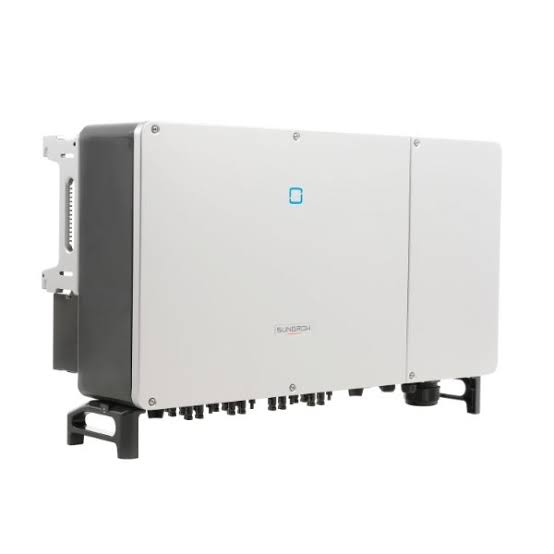 | Solar PV Inverter Multi-MPPT String Inverter Engineered for large-scale commercial and industrial solar installations, the SG110CX delivers exceptional energy yield... View product → |
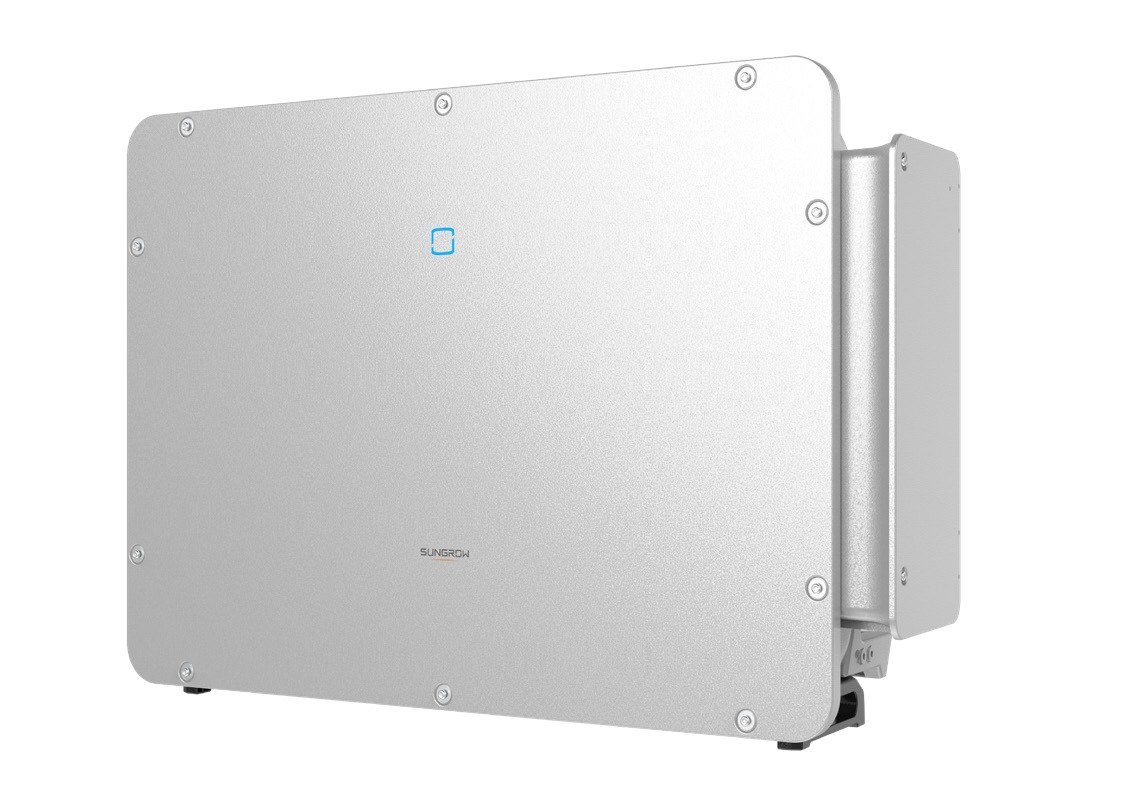 | Solar PV Inverter 75kW Multi-MPPT String Inverter Engineered for large-scale commercial and industrial solar installations, the SG75CX-P2 delivers exceptional energy... View product → |
Frequently asked questions
What does a solar on-grid inverter do?
It converts photovoltaic DC electricity into AC while matching the utility grid’s voltage, frequency and phase. MPPT controls extract available energy from the panels.
What happens to solar power between the panels and the utility connection?
Panels produce DC, the inverter converts it to AC, switchgear provides isolation and protection, and a transformer raises or lowers voltage when the project requires it before the utility connection.
When does a solar project need a transformer?
A transformer is needed when the inverter’s AC output voltage does not match the site distribution voltage or the utility interconnection voltage. The required kVA rating, winding arrangement and impedance must match the project.
What should you check before pairing an inverter with a transformer?
Compare AC voltage, phase, frequency, power and kVA ratings, transformer impedance, vector group, earthing, harmonic limits, protection settings and the utility’s interconnection requirements.
How do Pune conditions affect inverter and transformer selection?
Account for Pune’s monsoon humidity, dust, heat, rooftop exposure, ventilation, altitude, cable distances and local utility voltage requirements when selecting enclosures, cooling, derating and protection.
Related products
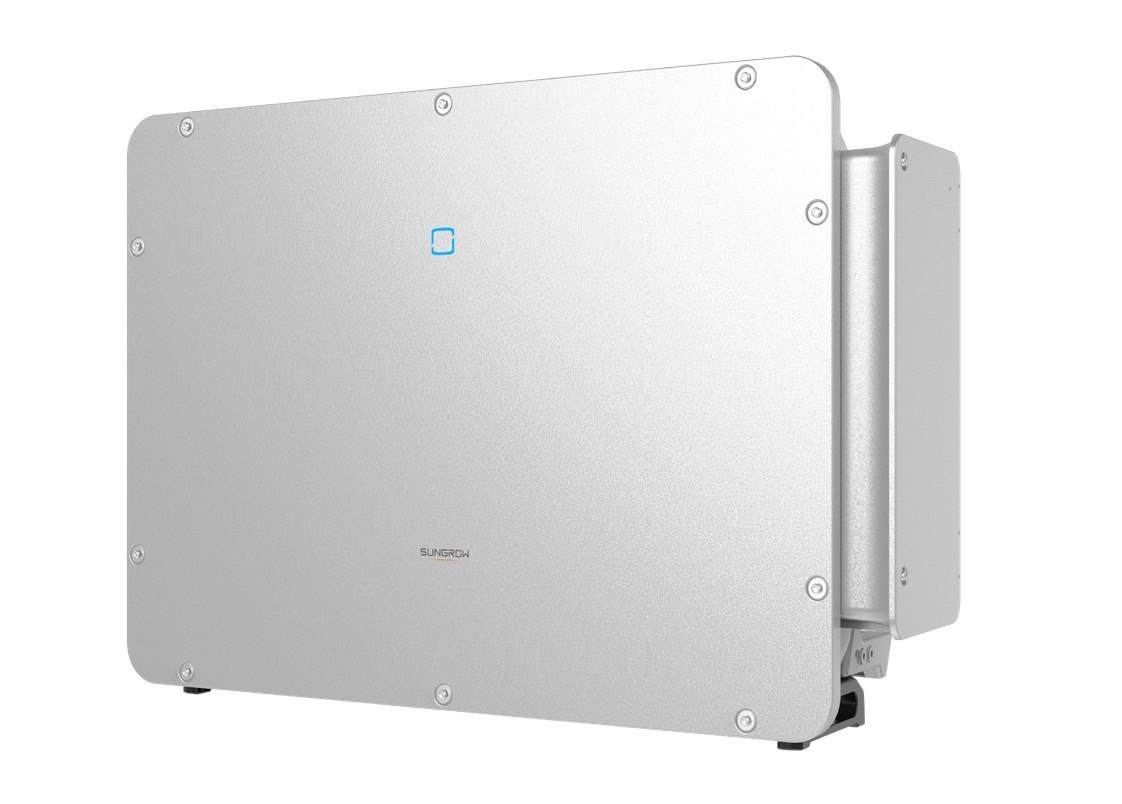 | Solar PV Inverter ungrow SG150CX — 150kW Multi-MPPT String Inverter Engineered for large-scale commercial and industrial solar installations, the SG150CX delivers... View product → |
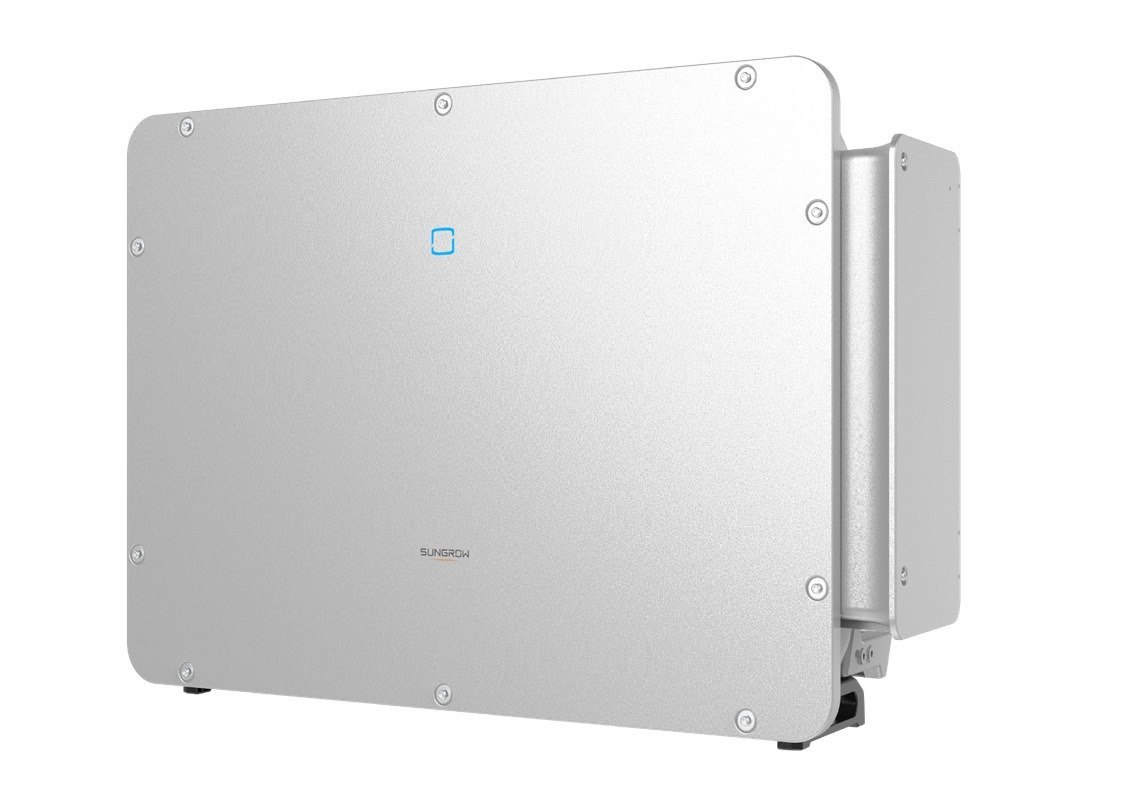 | Solar PV Inverter 125kW Multi-MPPT String Inverter Engineered for large-scale commercial and industrial solar installations, the SG125CX-P2 delivers exceptional energy... View product → |
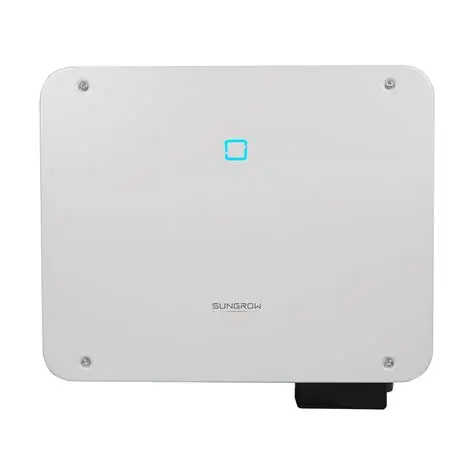 | Solar PV Inverter Sungrow 50 KW Solar PV inverter. A very robust product for commercial and industrial. View product → |
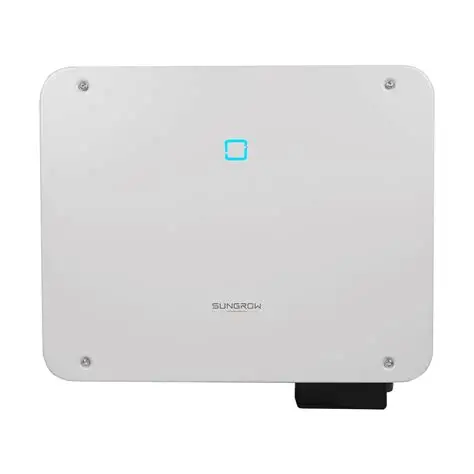 | Solar PV Inverter Sungrow 33 KW Solar PV inverter. A very robust product for commercial and industrial. View product → |