
A 585 Wp solar module and a transformer perform different jobs, so comparing them as competing products produces the wrong project decision. The useful comparison is between complete solar architectures: module capacity, inverter loading, voltage conversion, cable losses, transformer losses, grid approvals and annual exported energy. By the end, you will have a Pune-specific method for checking the design, documents and commercial assumptions behind each option.
Key takeaways
- Treat a 585Wp module and transformer as different project components.
- Size strings from module voltage, inverter limits and Pune operating temperatures.
- Compare annual kWh after losses, not only the 585Wp nameplate.
- Request DCR records, factory details and every quoted balance-of-system item.
A 585 Wp panel and a transformer are not interchangeable choices
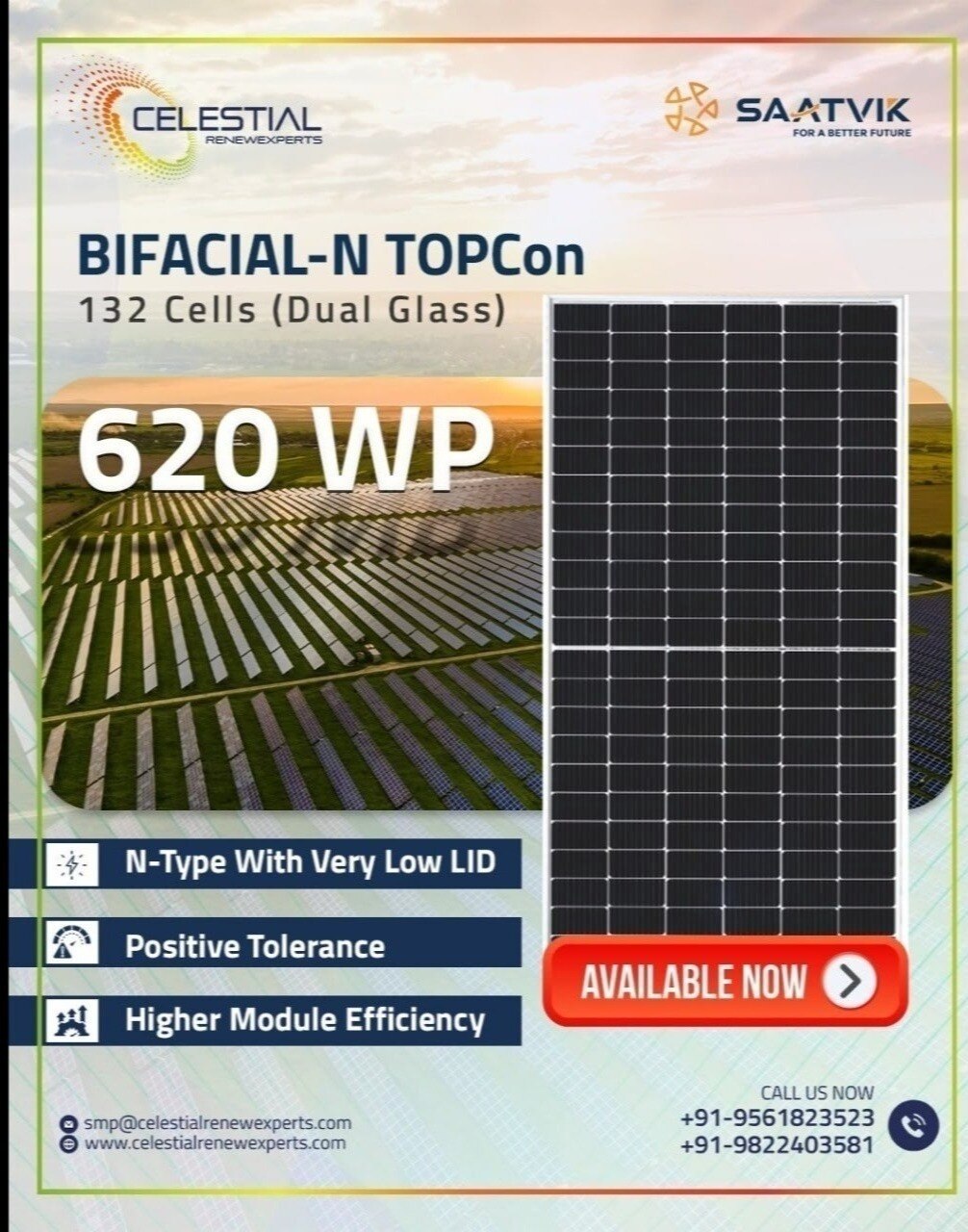
A 585 Wp rating belongs to one PV module: its DC nameplate output under STC, defined as 1,000 W/m² irradiance, 25°C cell temperature and AM1.5 spectrum. A transformer is an AC voltage-conversion and isolation device.
In a solar panels transformer design, modules feed inverters, the inverters feed a step-up transformer and medium-voltage switchgear, and the system reaches the sanctioned utility interconnection point. The transformer does not produce extra PV energy.
| Architecture | What you are assessing | Critical figures |
|---|---|---|
| 585 Wp modules with string inverters | Distributed DC generation converted to low-voltage AC, commonly 415 V | Module count, DC capacity, inverter AC rating, DC/AC ratio, MPPT range, clipping and cable loss |
| Transformer-based arrangement | Inverters followed by a step-up transformer, often from 415 V to 11 kV or 22 kV | Transformer kVA, no-load and load losses, switchgear, protection, cable runs and interconnection voltage |
Therefore, Saatvik DCR 585 Wp solar panels versus transformers in Pune means comparing complete systems at the grid connection, not a panel against a transformer. Use the same assumptions for annual kWh, specific yield, performance ratio, temperature derating, degradation, availability, auxiliary consumption and export curtailment.
A ₹/Wp comparison can favour cheaper modules while hiding higher inverter, structural, cable, transformer or grid-connection costs. Confirm the transformer rating and losses against the actual MSEDCL-sanctioned voltage and metering arrangement.
How to size strings, inverters and roof hardware around 585 Wp modules
A 585 Wp array works safely only when its voltage, current, temperature, roof loading and inverter limits agree; the wattage label alone cannot prove compatibility. Use this sequence for a 585wp solar panels comparison in pune:
1. Record the module data sheet values for maximum-power voltage and current, open-circuit voltage (Voc), short-circuit current (Isc), and temperature coefficients. Recalculate Voc at Pune’s lowest design temperature and operating power at the hottest cell temperature; STC’s 25°C cell rating does not represent a hot roof.
2. Choose string length so the cold-weather Voc remains below the inverter’s maximum DC voltage and the hot-weather operating voltage stays inside its MPPT window. Check each MPPT’s maximum operating current and short-circuit-current limit against the module’s actual current, including the manufacturer’s required safety margin.
3. Group modules by roof plane, tilt and shade pattern. Do not place east, west and shaded modules on one MPPT merely to reach a target string count; mismatch can reduce output even when the total DC kWp looks correct.
4. Set the DC/AC ratio from the hourly model, then quantify clipping, cable loss and inverter loading rather than choosing an inverter from module count alone. Add the transformer’s kVA, losses and protection requirements after fixing the inverter AC output and grid voltage.
5. Verify rail spans, clamp zones, module dimensions, wind uplift, roof load, drainage clearances and access paths. Check connector compatibility, cable bend radius, earthing, lightning protection and spare-module storage before approving the layout.
Compare annual kWh, not the nameplate wattage on the module
Compare both designs at the grid interconnection point in annual exported kWh, not by multiplying 585 Wp by the module count. A transformer converts inverter output from low-voltage AC, such as 415 V, to a sanctioned medium-voltage level such as 11 kV; it does not create additional PV energy.
| Architecture | Annual-yield calculation | Pune decision signal |
|---|---|---|
| Distributed string inverters | Model each roof plane, MPPT group, DC/AC ratio, clipping hours, mismatch, shade, cable loss, inverter availability and export curtailment | Stronger result on roofs with different orientations, parapets, tanks or intermittent shadows |
| Transformer-based central design | Model central-inverter clipping, 415 V and medium-voltage cable losses, transformer no-load and load losses, switchgear auxiliaries and curtailment | Stronger result for a uniform block layout with short collection runs and one medium-voltage connection |
For a sound Saatvik solar panel project comparison, request annual kWh at the meter, specific yield in kWh/kWp-year, performance ratio, degradation assumptions and the loss schedule—not only module kWp or ₹/Wp. Include the transformer’s kVA rating and efficiency curve, because its standby loss continues when PV output is low.
In a 585wp solar panels comparison in Pune, calculate each option’s first-year and lifetime exported energy, then divide total cost by lifetime kWh for levelized cost of energy.
A string design can win through better MPPT control while losing through more inverter replacements and AC protection points; a transformer design can reverse that trade-off through collection efficiency and simpler central maintenance.
Use a Pune project model for voltage, transformer rating and grid connection
A 1 MWp Pune project uses about 1,710 Saatvik 585 Wp modules. Pairing them with 800 kW of inverter capacity gives a 1.25 DC/AC ratio, but the transformer must carry the inverter’s maximum apparent power, not simply its 800 kW output.
At 0.95 power factor, a 1,000 kVA transformer provides practical headroom; confirm the final rating against the inverter data sheet and MSEDCL approval.
| Decision point | 585 Wp modules with string inverters | Transformer-based architecture |
|---|---|---|
| AC path | Multiple inverters export at 415 V | Inverters export at 415 V, then a step-up transformer feeds 11 kV or 22 kV switchgear |
| Cable runs | More AC circuits, but short runs suit distributed roofs | Short 415 V runs require the transformer near inverters; a remote transformer increases copper, voltage drop and fault-loop impedance |
| Grid connection | May suit an existing approved low-voltage point | Suits an 11 kV or 22 kV point with breaker, CTs/VTs, protection and metering |
| Losses and maintenance | Module-level MPPT limits mismatch effects; more inverter units need servicing | Transformer no-load and load losses add to energy losses; fewer central assets simplify block operation |
The transformer converts voltage and provides the protection arrangement; it does not create PV energy. Specify the utility interconnection point before choosing the solar panels transformer design, because the sanctioned voltage determines switchgear, earthing, anti-islanding, witness testing and cable architecture. That is the practical basis for saatvik dcr 585wp solar panels versus transformers in pune.
Verify DCR eligibility, factory records and the complete quotation
A DCR label is not enough: obtain the exact cell-and-module traceability required by your tender or government scheme. Ask for the module model number, manufacturing factory, serial-number range, cell origin, BOM revision, invoice trail and a signed DCR declaration.
If ALMM applies, verify that exact model, factory and 585 Wp rating on the current MNRE Approved List of Models and Manufacturers.
Request IEC 61215 design-qualification and IEC 61730 safety-qualification evidence, accredited test reports, Indian registration details, product and performance warranties, and factory inspection or dispatch records. A similarly named 585 Wp variant cannot substitute for the quoted model.
Your saatvik solar panel project comparison is incomplete without a line-by-line commercial schedule:
| Item to request | Check | Why it matters |
|---|---|---|
| DC equipment | Module quantity, exact model, connectors, spares and mounting steel | Prevents substitutions and hidden balance-of-system costs |
| AC equipment | Inverter model, DC/AC ratio, transformer kVA, 415 V/11 kV switchgear and protection | Exposes an undersized or overbuilt architecture |
| Energy model | Annual kWh, specific yield, clipping hours, losses, degradation, availability and curtailment | Compares systems at the interconnection point |
| Commercial total | Cables, civil works, testing, freight, taxes, commissioning, monitoring and exclusions | Stops a low ₹/Wp quote from hiding essential costs |
If Celestial Renewexperts LLP prepares the offer, require these documents and line items in the signed quotation, not only in a presentation. Also demand separate prices for transformer no-load and load losses, cable assumptions, and any utility-connection work.
Related products
 | Solar Panel Saatvik TEJ Bifacial N-TOPCon Solar Panel (144 Cells, Dual Glass) | 560W–600W Looking for a high-efficiency bifacial solar panel for your rooftop or... View product → |
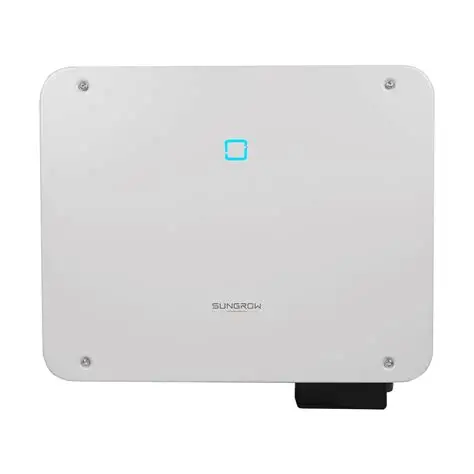 | Solar PV Inverter Sungrow 33 KW Solar PV inverter. A very robust product for commercial and industrial. View product → |
Frequently asked questions
Are a 585Wp solar panel and a transformer interchangeable choices?
No. A 585Wp panel produces DC electricity under STC, while a transformer converts AC voltage and provides isolation. A project can need both.
How do you size strings and inverters for 585Wp modules?
Check the module’s Voc, Vmp, temperature coefficients and current against the inverter’s maximum DC voltage, MPPT range and input current. Then confirm the series count at Pune’s lowest design temperature and the parallel strings against inverter limits.
Should you compare solar designs by module wattage or annual kWh?
Compare estimated annual AC kWh after temperature, soiling, mismatch, cable, inverter and transformer losses. Module wattage alone does not predict delivered energy.
What should a Pune solar project model include?
Model array DC capacity, inverter loading, AC voltage, transformer kVA, cable lengths, protection, sanctioned load, interconnection voltage and the utility’s grid-connection requirements.
How can you verify DCR eligibility for Saatvik 585Wp panels?
Ask for the exact model number, serial or batch records, manufacturer documentation, DCR evidence required for your scheme and a quotation identifying modules, inverter, transformer, structures, protection and installation separately.
Related products
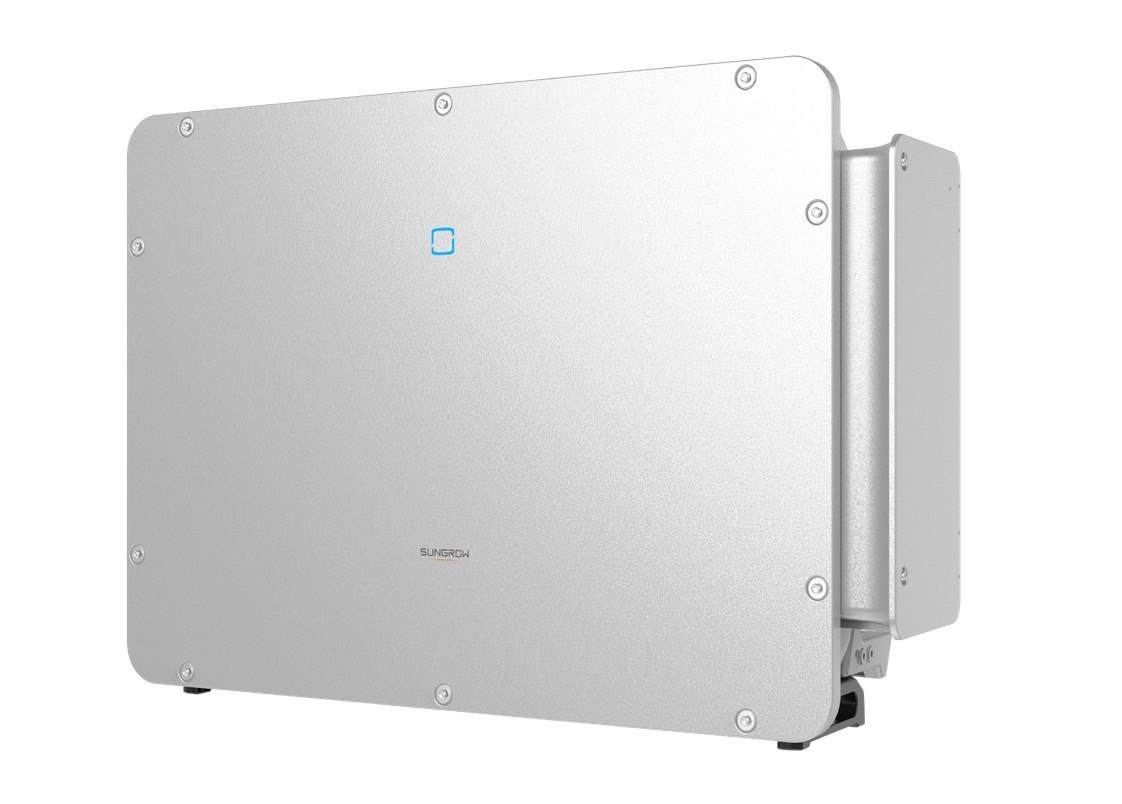 | Solar PV Inverter ungrow SG150CX — 150kW Multi-MPPT String Inverter Engineered for large-scale commercial and industrial solar installations, the SG150CX delivers... View product → |
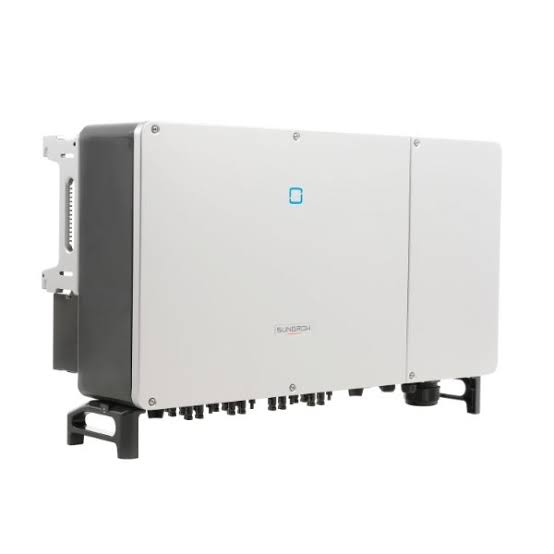 | Solar PV Inverter Multi-MPPT String Inverter Engineered for large-scale commercial and industrial solar installations, the SG110CX delivers exceptional energy yield... View product → |
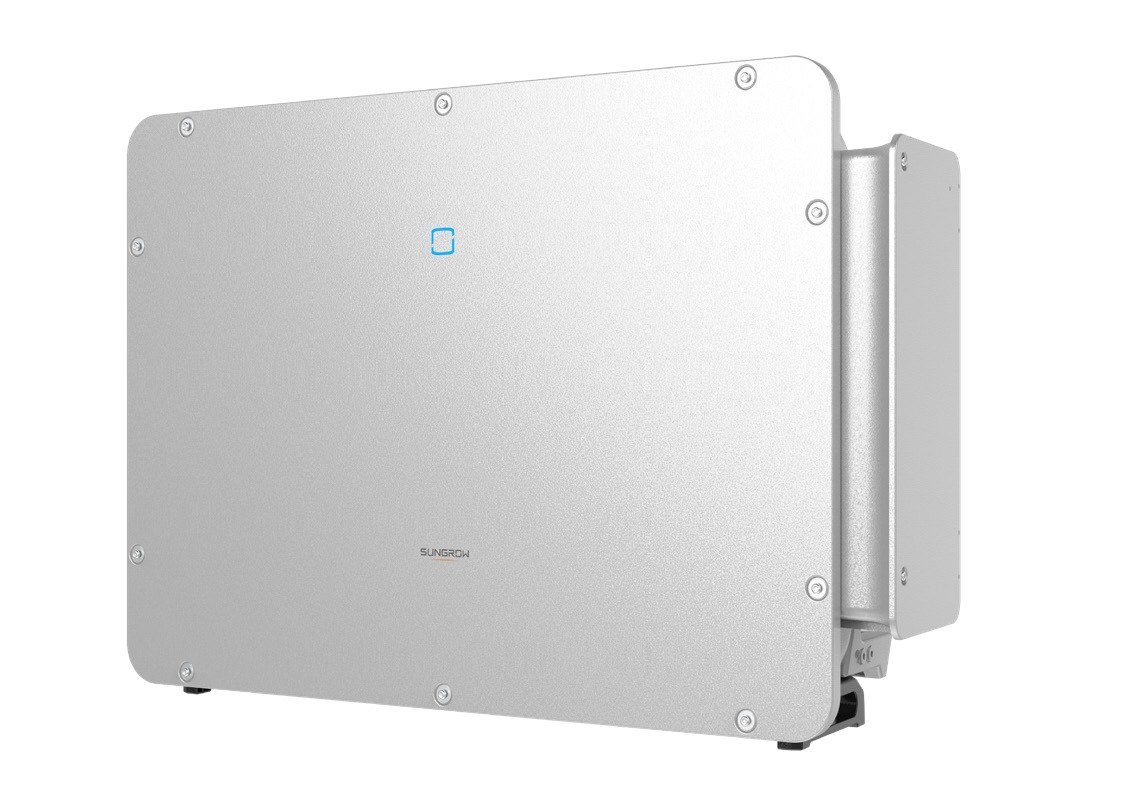 | Solar PV Inverter 75kW Multi-MPPT String Inverter Engineered for large-scale commercial and industrial solar installations, the SG75CX-P2 delivers exceptional energy... View product → |
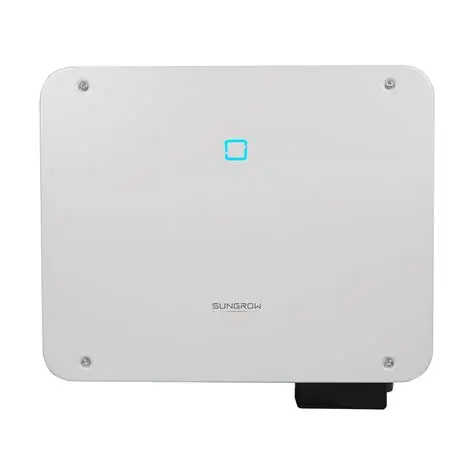 | Solar PV Inverter Sungrow 50 KW Solar PV inverter. A very robust product for commercial and industrial. View product → |