
A Sungrow battery energy storage system in Pune does not automatically need a separate external transformer: the deciding comparison is the system’s PCS AC voltage against the approved point-of-connection voltage. By checking the electrical path, Sungrow documentation, utility conditions and transformer-loading calculations, you can identify whether the transformer belongs inside the supplied package or in the site’s commercial BESS electrical infrastructure.
Key takeaways
- Match the PCS output voltage to the approved PCC voltage.
- Use the Sungrow datasheet and single-line diagram to confirm transformer requirements.
- Base transformer sizing on PCS power, duty cycle, harmonics and site conditions.
- Include metering, protection, earthing and utility approvals in the grid-interface scope.
When does a Sungrow BESS need a separate transformer?
A Sungrow BESS in Pune needs a separate transformer when its low-voltage PCS output does not match the approved point of common coupling (PCC) voltage. The answer to “Does Sungrow for battery energy storage system need transformers in Pune?” therefore depends on the sanctioned facility connection and the selected PCS, not the battery’s kWh rating.
The electrical path is: battery racks feed a bidirectional power conversion system (PCS); the PCS produces low-voltage AC; that AC passes through a low-voltage switchboard and, where required, a step-up transformer; medium-voltage switchgear, metering and the PCC then connect it to the facility or utility grid.
The transformer connects to the PCS AC side, never directly to the battery racks.
| PCC arrangement | Transformer position | Decision |
|---|---|---|
| Low-voltage PCS to matching low-voltage PCC | No step-up transformer in the BESS path | A separate transformer may not be needed |
| Low-voltage PCS to an 11 kV, 22 kV or 33 kV feeder | PCS-to-medium-voltage transformer | Use a transformer or approved integrated MV package |
| PCS, transformer and MV switchgear on one skid | Inside the integrated package | “No separate enclosure” does not mean “no transformer” |
Battery storage transformers in Pune must match the approved voltage, impedance, grounding, protection and isolation design. An existing customer transformer can serve the BESS only after checks confirm spare kVA, thermal loading, reverse-power capability, fault duty, metering, protection coordination and utility acceptance.
Ask whether the selected Sungrow package contains the transformer or assigns it to the EPC scope.
What should you check in the Sungrow datasheet and single-line diagram?
Start with the exact PCS and system datasheet: Sungrow BESS transformer requirements are model-specific, and the battery cabinet brochure cannot establish the AC interface.
1. Record the PCS rated AC voltage, permissible voltage range, frequency, maximum AC current, continuous apparent-power rating, power-factor range, and charging and discharging limits. Utility-scale PCS equipment commonly uses a 690 V-class output, while commercial systems may use a 400 V-class output. Confirm the selected model; battery kWh does not reveal its AC voltage.
2. Mark the transformer on the single-line diagram and record its voltage ratio, vector group, impedance, neutral treatment, tap arrangement, insulation level, and winding-temperature rise. A low-voltage PCS feeding an 11 kV, 22 kV or 33 kV connection needs a transformer or an approved integrated medium-voltage package.
3. Define the supply boundary. Confirm whether Sungrow or the EPC supplies the transformer, MV switchgear, protection relays, CTs, VTs, metering, auxiliary AC supply, earthing and communications. Request the transformer datasheet, MV boundary drawing, protection philosophy, loss schedule, tap range, acoustic and fire data, and responsibility matrix.
4. Request evidence for anti-islanding, ride-through, grid-support modes and fault-current behavior. A PCS does not respond like a synchronous generator, so protection settings must use the manufacturer’s actual current response and trip thresholds.
Obtain the approved grid-connection configuration before comparing quotations. “No separate transformer” means only that the complete AC-to-MV path is shown, assigned and accepted.
How do Pune approvals determine the transformer arrangement?
Pune approval determines the transformer arrangement, not the Sungrow nameplate. The sanctioned load, sanctioned interconnection voltage and approved point of common coupling issued by the relevant Maharashtra distribution or transmission utility come first.
The question “does Sungrow for battery energy storage system need transformers in Pune” has no answer until that approved scheme is checked. Follow this procedure:
1. Match the PCS connection to the approved 11 kV, 22 kV or 33 kV voltage. The utility may require a dedicated transformer, defined isolation point, revenue metering, CT and VT specifications, directional overcurrent and earth-fault protection, anti-islanding and remote tripping.
2. Apply the Maharashtra Electricity Regulatory Commission framework with Central Electricity Authority connectivity and electrical-safety requirements. A manufacturer certificate does not approve a voltage or operating mode for your site.
3. Confirm whether the BESS charges from the grid and exports to it. Reverse power affects tap settings, voltage regulation, CT orientation, protection coordination and metering logic.
4. Reuse an existing transformer only after verifying thermal loading, impedance, fault contribution, neutral and earthing arrangement, reverse-power suitability, protection coordination and utility acceptance. Nameplate kVA alone proves nothing.
5. Submit load-flow, short-circuit, harmonic and protection-coordination studies with the interconnection application. These documents show whether the commercial BESS electrical infrastructure matches the utility’s fault, metering and protection scheme.
A technically workable transformer can still fail approval if its isolation, relay logic or metering differs from the sanctioned point of common coupling. The utility-approved single-line diagram controls the final arrangement.
How should you size the BESS transformer?
Size the transformer from the highest bidirectional apparent power, in kVA, during charging and discharging—not from battery kWh alone. kWh tells you how long the battery can deliver energy at a stated power; kW and kVAr determine instantaneous transformer loading.
Two systems can each store 10 MWh yet have 5 MW and 2.5 MW PCS ratings, requiring different transformer and MV equipment. For Sungrow BESS transformer requirements, calculate the maximum simultaneous demand using:
- PCS continuous active-power rating and maximum apparent power
- Operating power factor and reactive-power demand
- Auxiliary AC load, transformer losses and harmonic-heating allowance
- Ambient temperature, installation altitude, overload duration and future expansion
| Operating case | What to calculate | Why it matters |
|---|---|---|
| Charging | Maximum permitted import kW plus kVAr | Prevents undersizing during grid charging |
| Discharging | Maximum export kW plus kVAr | Sets transformer and MV feeder demand |
| Grid support | Fast reactive-power or voltage-support duty | Captures non-unity-power-factor loading |
Check continuous kVA at actual Pune site conditions against the highest simultaneous active and reactive demand. Specify voltage ratio, frequency, percent impedance, vector group, tap range, insulation level, neutral treatment and winding-temperature rise. Percent impedance changes fault current and protection coordination; reverse power changes voltage regulation.
For battery storage transformers in Pune, choose oil-filled or dry-type equipment after checking fire separation, bunding, ventilation, acoustic limits, maintenance access and indoor or outdoor constraints. Include cable segregation, earthing and emergency isolation in the layout.
What should be included in the Pune BESS transformer and grid-interface scope?
Compare quotations against the complete grid interface, not the transformer price alone. Request a marked-up single-line diagram, transformer datasheet, MV-switchgear boundary, protection philosophy, loss schedule, tap range, short-circuit withstand data, acoustic and fire information, and a responsibility matrix.
| Arrangement | What it means | When it applies |
|---|---|---|
| Separate transformer | EPC supplies a transformer between the PCS and MV switchgear | PCS voltage differs from the approved connection voltage |
| Integrated package | Sungrow package contains transformer functionality with PCS and MV equipment | The selected model and utility-approved scheme support the packaged interface |
| Existing transformer | BESS connects behind the facility transformer | Utility accepts its spare kVA, thermal loading, fault duty, metering and reverse-power operation |
Your commercial BESS electrical infrastructure scope must identify the transformer, MV switchgear, incomer and feeder protection, revenue or check metering, CTs, VTs, earthing and bonding, surge protection, auxiliary AC supply, SCADA and communications, emergency isolation and commissioning tests.
The matrix must state who obtains Maharashtra utility approval, supplies relay settings and studies, and proves reverse-power, anti-islanding and trip functions on site.
Use the Sungrow BESS transformer requirements to close quotation gaps. Ask: What is the PCS AC voltage? What is the approved point-of-connection voltage? Is the transformer physically included in the Sungrow package or assigned to the EPC?
Celestial Renewexperts LLP can coordinate these interfaces and utility-facing documents, but the approved scheme and selected Sungrow model control the final arrangement.
Related product
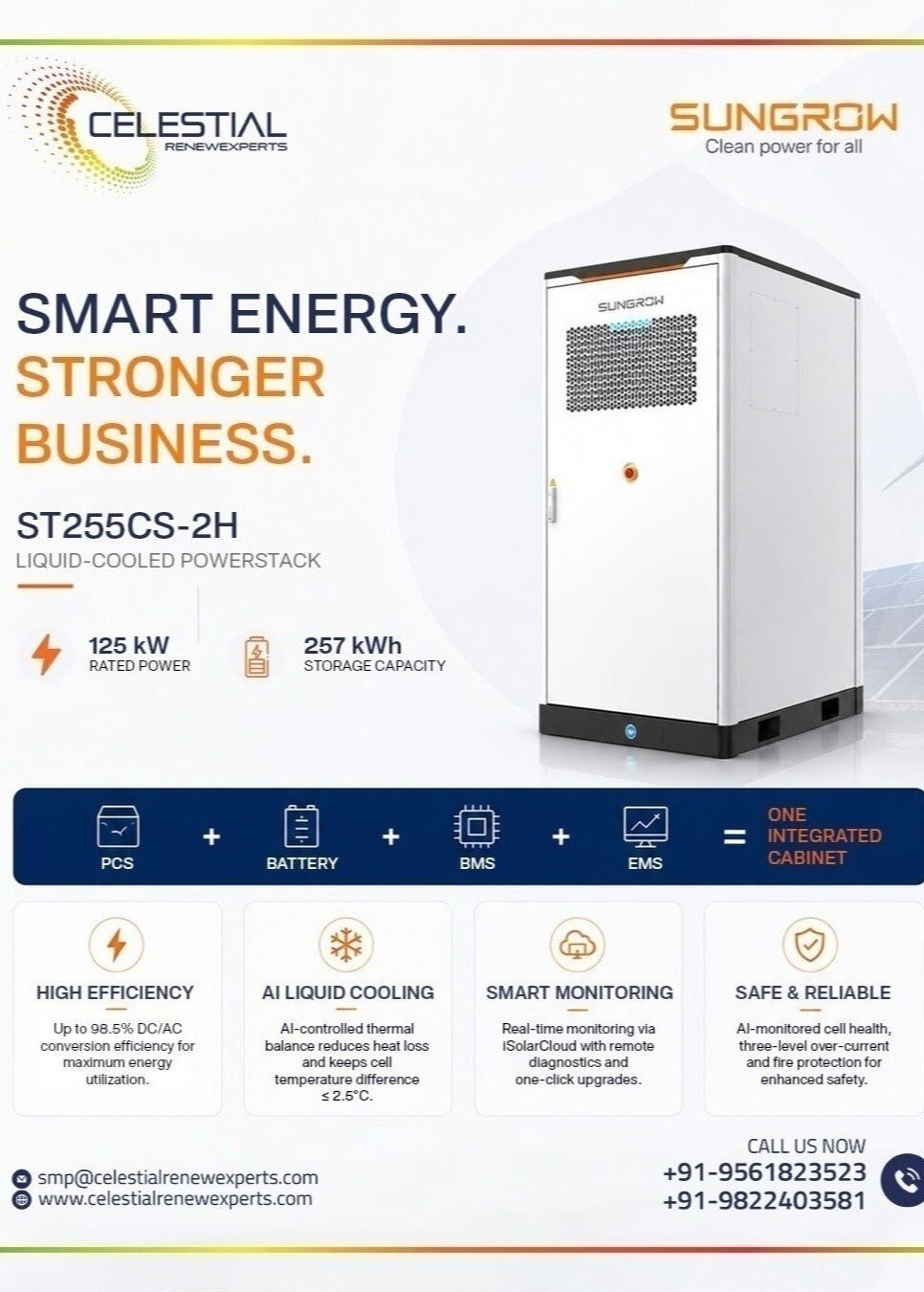
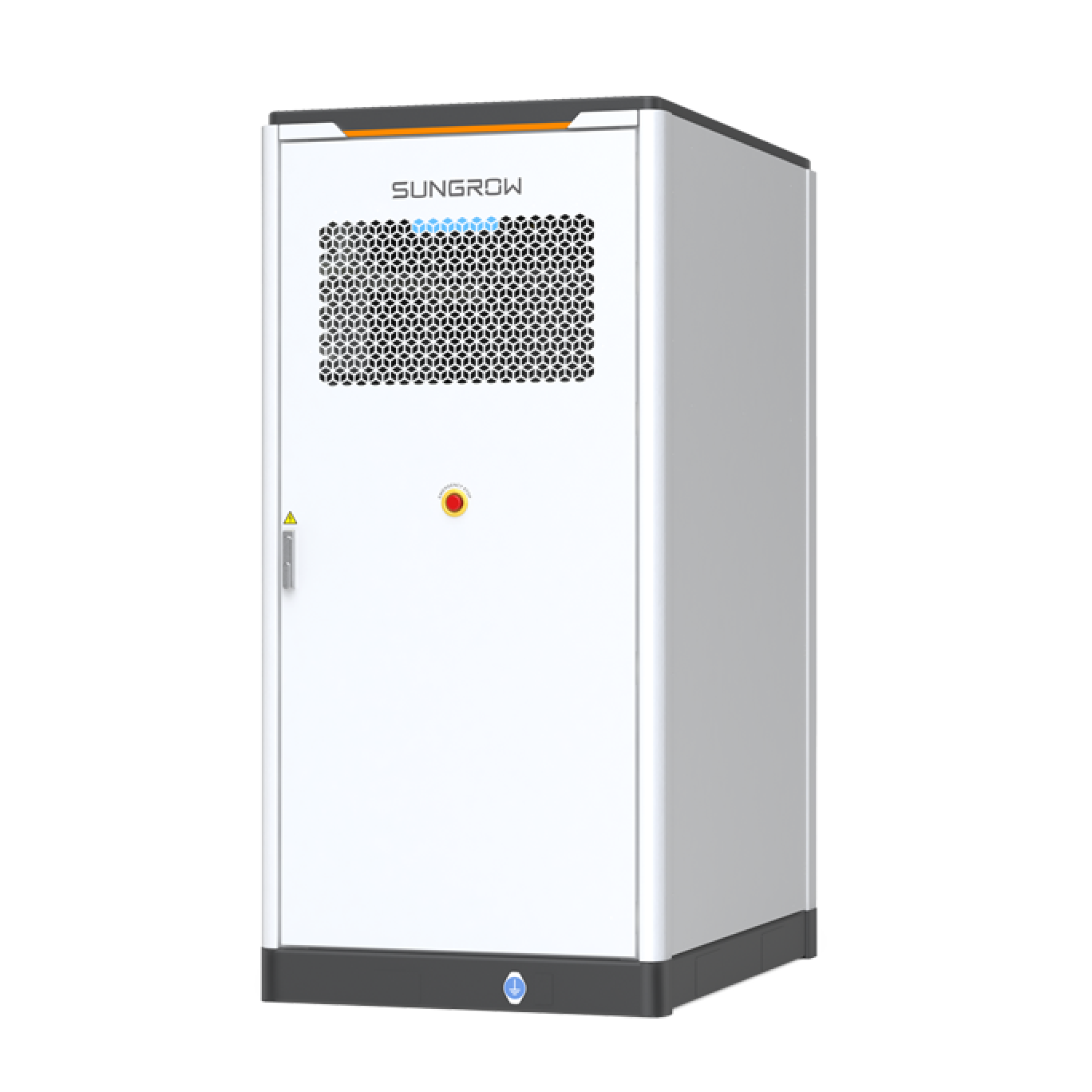 | BESS Sungrow 125 kw/255kwH C & I BESS Sungrow PowerStack ST255CS-2H – Intelligent Commercial & Industrial Battery Energy Storage System The Sungrow PowerStack ST255CS-2H is a... View product → |
Frequently asked questions
When does a Sungrow BESS need a separate transformer in Pune?
A separate transformer is needed when the PCS low-voltage output does not match the sanctioned PCC voltage, or when the utility connection requires medium-voltage interfacing. The battery’s kWh capacity alone does not determine the arrangement.
Which Sungrow documents confirm the BESS transformer arrangement?
Check the selected PCS datasheet for AC voltage, rated current, frequency, power factor, overload capability and harmonic limits. Check the approved single-line diagram for the PCS terminals, transformer, switchgear, protection, metering and PCC.
How do Pune approvals affect a BESS transformer?
Use the sanctioned connection voltage and the utility-approved single-line diagram as the design basis. Confirm the requirements with the responsible distribution or transmission utility and obtain the required electrical inspection and energisation approvals before procurement.
How should you size a transformer for a Sungrow BESS?
Start with the PCS maximum continuous kW or kVA, charging and discharging duty, ambient temperature, installation altitude, impedance, inrush, harmonics and future expansion. Confirm the final rating against the Sungrow PCS limits and the utility fault-level study.