
A 125 kW/255 kWh battery can reduce selected transformer peaks, absorb surplus solar and shift consumption, but its nameplate capacity does not prove that it will solve your site’s overload or backup problem. You will be able to test the battery against measured demand, transformer limits, integration requirements, tariff data and Pune-specific approvals before requesting quotations.
Key takeaways
- Match the 125kW inverter to transformer capacity, protection settings and peak load.
- Use 255kWh as stored energy, not continuous output power.
- Check fault levels, earthing, isolation and protection before connecting a BESS.
- Compare battery storage with transformer upgrades using measured load and tariff data.
What 125 kW and 255 kWh mean at a transformer-fed site
A 125 kW inverter can supply up to 125 kW of real power to a transformer-fed facility, reducing grid import by that amount while the battery has sufficient charge.
At 415 V three-phase, this is approximately 174 A at unity power factor, so the low-voltage busbar, breaker, cable, transformer and protection settings must all accept that current.
The 255 kWh rating describes stored energy, not output power. At the full 125 kW rating, 255 ÷ 125 gives a theoretical 2.04 hours. Guaranteed usable energy is lower after the reserve state-of-charge window, inverter losses, auxiliary consumption, temperature limits and end-of-life capacity fade.
A practical operating pattern is:
- Charge from excess rooftop solar or during low-demand periods.
- Discharge during evening demand or a measured site peak.
- Hold a reserve for outages or scheduled load events.
Peak shaving does not raise the transformer’s kVA rating. If a facility exceeds its safe transformer limit by 200 kW, a 125 kW BESS cannot remove that entire overload; it can leave approximately 75 kW for the transformer, subject to control response and available charge.
The 125kw 255kwh battery energy storage system benefits transformers in Pune only after the measured demand profile confirms a fit. A 125kw 255kwh bess in Pune also needs heat rejection, drainage, dust control and monsoon protection because temperature derating or blocked ventilation can reduce output during the peak it was bought to manage.
Backup requires islanding equipment, black-start capability, prioritised loads and a protection study.
How to prove the battery fits your transformer and load profile
A fit is proven at the transformer boundary, not by matching 255 kWh to a nameplate. Record the transformer’s kVA rating, 15-minute or 30-minute demand intervals, peak import, minimum load, reverse power, and the BESS point of interconnection.
At 415 V three-phase, a 125 kW inverter produces about 174 A at unity power factor. Allow for inverter efficiency, reactive power and voltage variation before sizing the low-voltage breaker, busbar, cable and transformer. A 125 kW BESS cannot remove a 200 kW peak unless the remaining transformer load is already within its permitted limit.
| Measurement | What it proves | New constraint to check |
|---|---|---|
| Transformer kVA and measured maximum kVA | Headroom available for peak shaving | Thermal overload after residual load |
| Import, export and phase currents | Whether charging or discharging reduces boundary current | Phase imbalance or reverse-power trip |
| 15-minute or 30-minute demand profile | Peak duration and required dispatch window | Power limit reached before the peak ends |
| 415 V voltage, power factor and reactive kVA | Actual inverter current requirement | Voltage rise, low power factor or excess current |
| Short-circuit level and protection settings | Fault-duty and coordination at the connection point | Breaker rating, nuisance trips or failed selectivity |
Configure the energy-management system to measure that boundary and enforce import, export and state-of-charge limits. Good commercial bess transformer integration also checks harmonics, ambient-temperature derating, and whether the transformer protection reacts faster than the BESS controls.
A signed load-flow and protection study should show transformer current before and after dispatch. Reject the design if any phase, feeder, breaker or thermal limit remains exceeded during the measured worst case.
How to connect a BESS to solar transformers safely
Connect the battery through a bidirectional power conversion system (PCS) to a dedicated breaker and isolation point on the AC side of the solar transformer or medium-voltage bus. This commercial BESS transformer integration also needs metering, communications and protection coordinated with the inverter, transformer and commercial switchboard.
1. Size the low-voltage path for more than energy capacity. At 415 V three-phase, a 125 kW inverter draws about 174 A at unity power factor; include efficiency, reactive current, voltage variation, cable ampacity, busbar rating and breaker interrupting capacity.
2. Confirm the transformer accepts bidirectional power flow. Check its kVA rating, voltage ratio, regulation, neutral arrangement, short-circuit contribution, harmonic current and existing relay settings. Coordinate overcurrent, earth-fault, surge protection and anti-islanding functions across the PCS, transformer and switchboard.
3. Install revenue-grade or suitably accurate meters at the transformer boundary and configure the energy-management system with import, export, ramp-rate and state-of-charge limits. This lets a BESS for solar transformers absorb midday surplus without uncontrolled reverse flow, then discharge during a measured peak.
4. Treat backup as a separate design. Supply selected loads through an approved transfer or islanding device, define load priorities, provide black-start capability where required and maintain reserve state of charge; peak shaving and outage backup consume the same stored energy.
5. Specify cell-level thermal-runaway propagation evidence, smoke and off-gas detection, emergency shutdown, responder access, separation distances and ventilation or deflagration control. Add a written incident-response plan; transformer fire protection alone does not cover a battery enclosure.
How the Pune business case compares with other capacity upgrades
A 125kw 255kwh battery energy storage system benefits transformers in Pune when measured peaks are brief, recurring and within a 125 kW reduction envelope. At full rated output, 255 kWh equals 2.04 hours; compare guaranteed usable energy, not nameplate capacity, after state-of-charge reserve, conversion losses, temperature limits and degradation.
It cannot remove a 200 kW peak unless the remaining import stays within the transformer limit.
| Option | Better choice when | Why it loses or wins |
|---|---|---|
| Transformer augmentation | Load exceeds the transformer limit for long periods, or demand will grow permanently | Provides lasting capacity, but involves utility approval, outage planning, civil work and capital cost |
| Demand controls | Non-essential loads can be shifted or stopped during a few predictable peaks | Lowest-complexity route; it fails when production cannot be interrupted |
| Power-quality equipment | The problem is voltage sag, harmonics, flicker or poor power factor | Filters and compensators address waveform or reactive-power issues; they do not supply sustained real power |
| Diesel generation | You need multi-hour or multi-day outage backup with fuel available | Strong for long outages, but adds emissions, noise, maintenance and fuel logistics |
| 125kw 255kwh bess in Pune | Peaks recur for roughly two hours, excess solar is available, and augmentation is slow or costly | It limits transformer import while preserving production, but needs usable-energy guarantees and suitable controls |
Choose the battery after comparing 15-minute or 30-minute demand data, sanctioned demand and transformer loading. Celestial Renewexperts LLP can support that comparison by checking the proposed BESS against switchboard limits, protection settings and the actual point of interconnection.
Related product
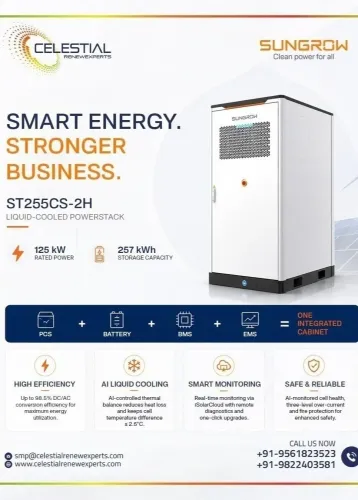
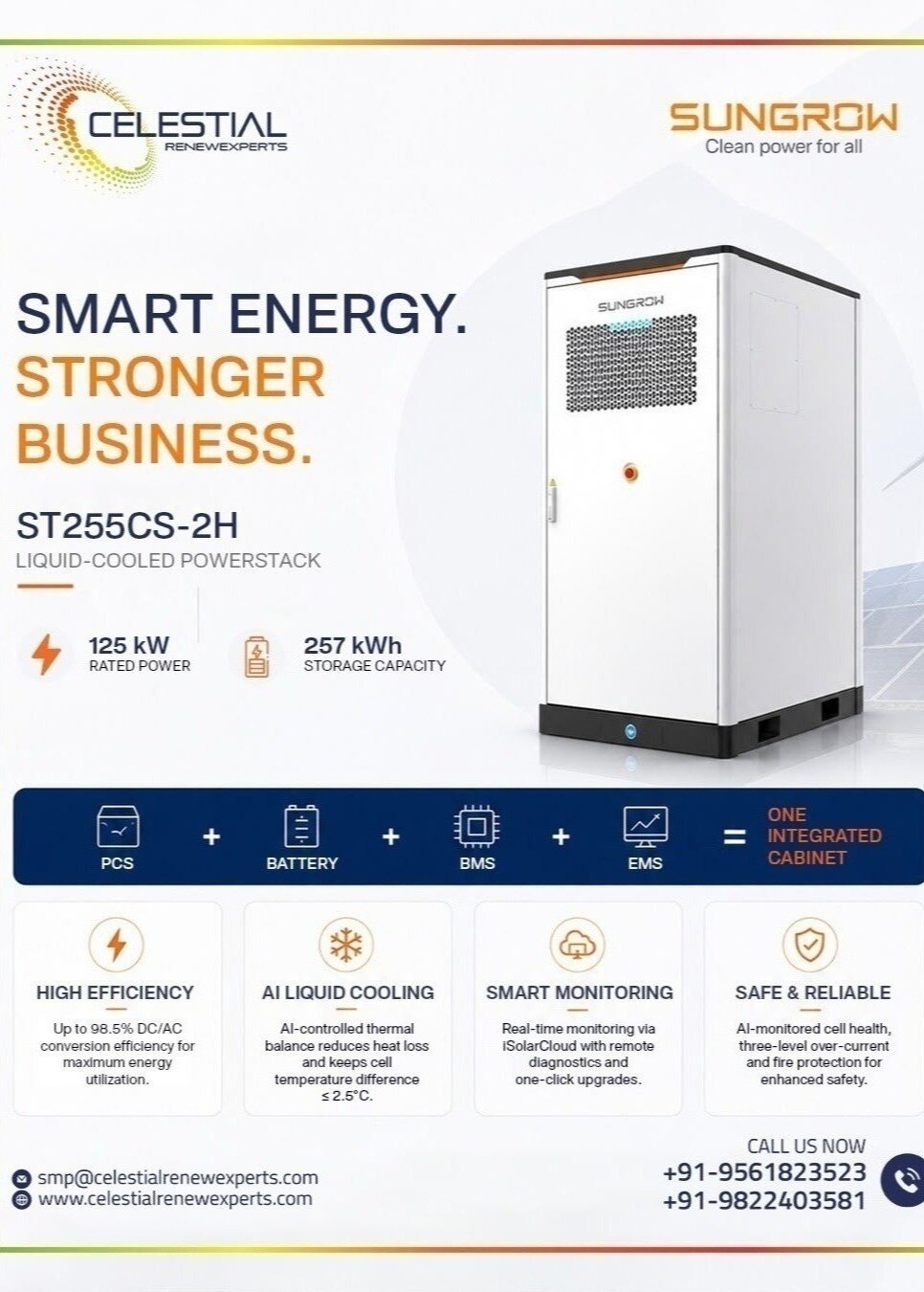
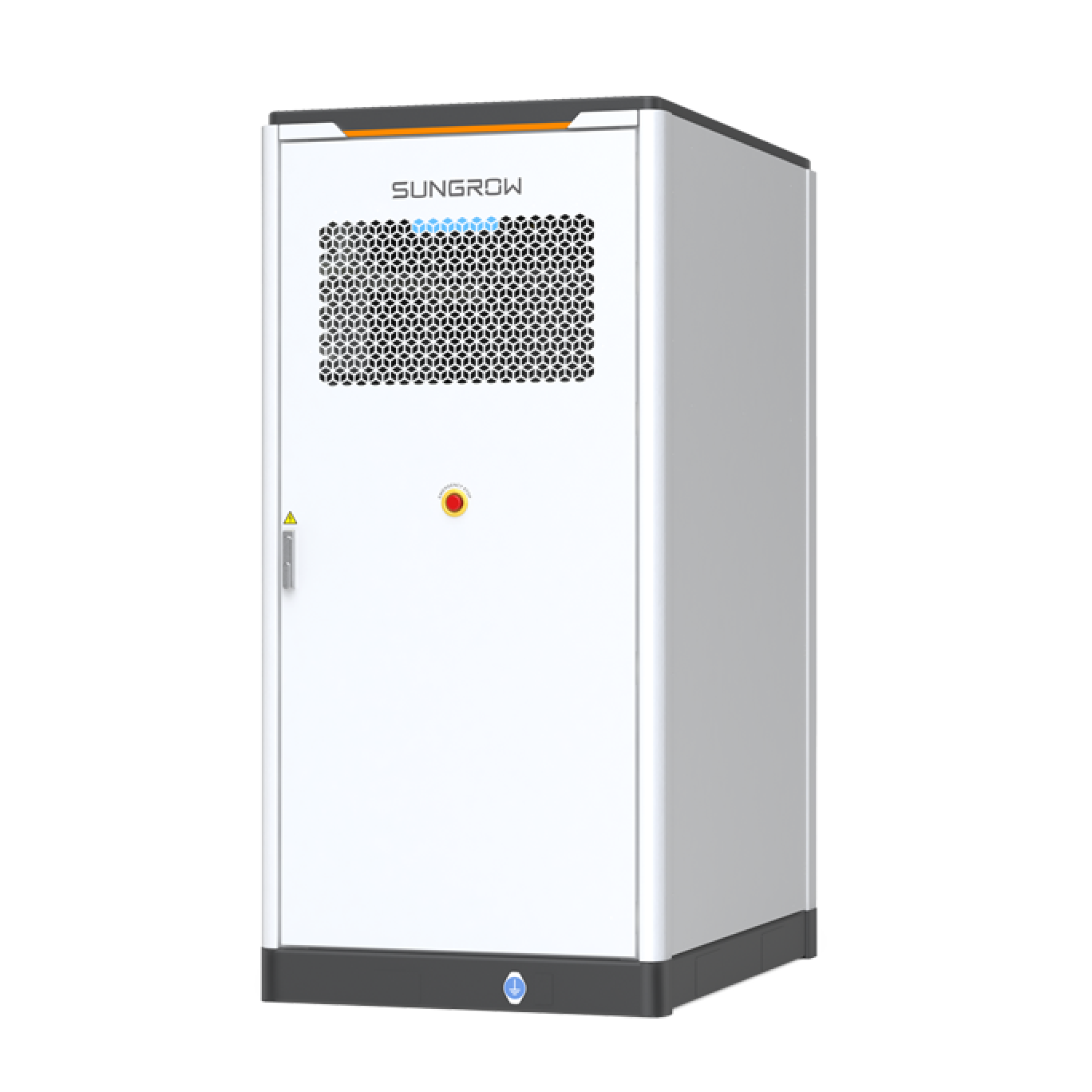 | BESS Sungrow 125 kw/255kwH C & I BESS Sungrow PowerStack ST255CS-2H – Intelligent Commercial & Industrial Battery Energy Storage System The Sungrow PowerStack ST255CS-2H is a... View product → |
What to verify before selecting Sungrow PowerStack ST255CS-2H
A supplier quotation is not enough for the Sungrow PowerStack ST255CS-2H. For a 125kw 255kwh bess in pune, match the exact datasheet and contract to the transformer study, including usable energy, continuous and overload power, AC or DC coupling, auxiliary consumption, high-temperature derating, reactive-power range and 415 V current.
| Technical | Obtain and verify | Failure if missing |
|---|---|---|
| Datasheet and GA drawing | Usable kWh, 125 kW output, dimensions, clearances, IP rating, ventilation and drainage | The enclosure may not deliver rated power in Pune heat or monsoon humidity |
| PCS and battery test reports | IEC 62933, IEC 62477-1, IEC 62619 or the standards named on the certificate; harmonic limits and grid-support functions | Protection and power-quality assumptions remain unproved |
| Integration drawings | Single-line diagram, breaker ratings, earthing, metering, communications and transformer connection | Bidirectional flow or fault coordination can be wrong |
| Commercial schedule | Warranty years, throughput, retained capacity, availability, response time, exclusions, spares and local service SLA | Claimed sungrow battery energy storage system benefits may disappear after degradation or a fault |
| Regulatory file | CEA connectivity and safety compliance, DISCOM approval, CEIG or electrical-inspector requirements, fire NOC and approved protection settings | Energisation can be delayed or refused |
Also request battery-fire test evidence, emergency procedures, software access and commissioning records. Confirm who pays for civil works, GST, transport, insurance, annual maintenance and replacement modules. Make the contract state guaranteed usable kWh and kW at the site’s design ambient temperature, not only nameplate ratings.
Frequently asked questions
What do 125kW and 255kWh mean at a transformer-fed site?
125kW is the maximum real-power output of the inverter, while 255kWh is the battery’s stored-energy capacity. The inverter limits instantaneous power; the usable runtime depends on the load, state of charge, reserve settings and conversion losses.
How do you prove a BESS fits a transformer and load profile?
Use interval meter data to compare transformer loading, site demand, solar production and operating hours. Check the transformer’s rated kVA, phase configuration, voltage, impedance, protection settings and available short-circuit capacity against the BESS design.
How do you connect a BESS to a solar transformer safely?
Define the point of common coupling, install correctly rated switching and protection, confirm earthing and isolation, and coordinate inverter, transformer and upstream protection settings. Complete commissioning tests before enabling export or grid-parallel operation.
What should you verify before selecting Sungrow PowerStack ST255CS-2H?
Verify its rated power and energy, usable capacity, voltage and frequency compatibility, operating temperature range, installation clearances, fire-safety provisions, communications, warranty terms and compliance documents against your site design.