

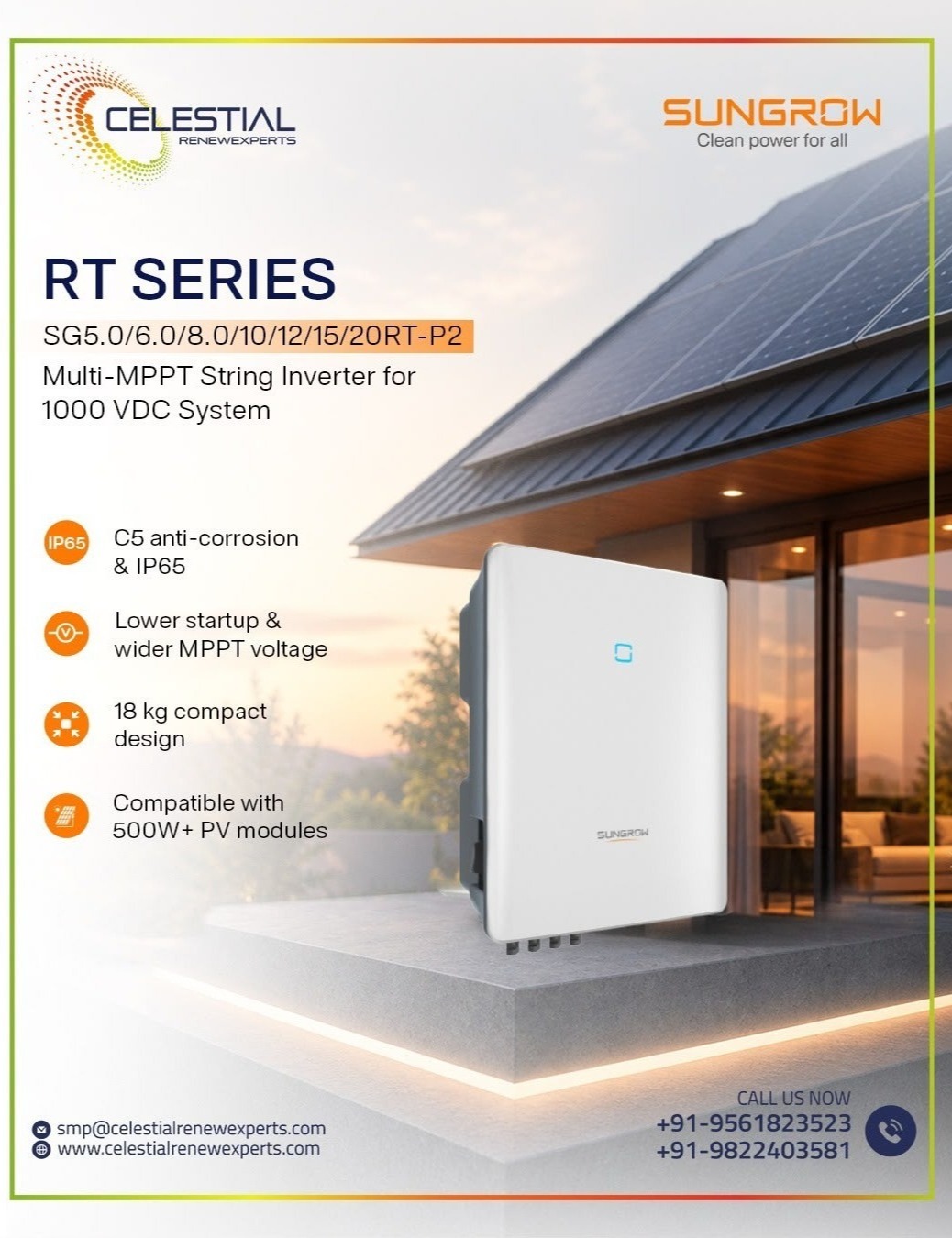
A solar inverter is one of the most important components of a photovoltaic system because it converts the direct current generated by solar panels into usable alternating current. For commercial, industrial, and large rooftop projects in Mumbai, selecting the right Solar PV Inverter Sungrow solution can influence energy conversion, system monitoring, operating stability, and long-term performance.
Mumbai and other parts of Maharashtra experience varying temperatures, monsoon conditions, humidity, and changing solar irradiance. An inverter therefore needs to work efficiently under changing environmental and load conditions. The correct inverter capacity should be determined after evaluating the PV array size, module configuration, voltage range, expected generation, electrical infrastructure, and future expansion plans.
Features
Depending on the selected model and project configuration, modern Sungrow solar inverter solutions may offer:
High-efficiency power conversion
Multiple MPPT configurations for improved energy harvesting
Integrated system monitoring
Protection and diagnostic capabilities
Compatibility with commercial and utility-scale PV configurations
Intelligent operation and system management
Key Benefits
A properly engineered inverter system can help improve energy utilization, simplify performance monitoring, and identify abnormal operating conditions more quickly. Appropriate inverter sizing can also reduce avoidable system losses and support reliable operation throughout the solar project's lifecycle.
For businesses in Mumbai considering rooftop or commercial solar installations, inverter selection should be based on engineering requirements rather than capacity alone. Celestial Renewexperts LLP supports customers in evaluating solar power components according to project requirements and electrical conditions.
FAQs
What does a solar PV inverter do?
It converts DC electricity generated by solar modules into AC electricity suitable for use by electrical loads or the grid.
How should inverter capacity be selected?
Selection depends on PV capacity, voltage, string design, site conditions, and expected system performance.
Is monitoring important in a solar inverter?
Yes. Monitoring helps operators track generation, system status, and potential performance issues.