
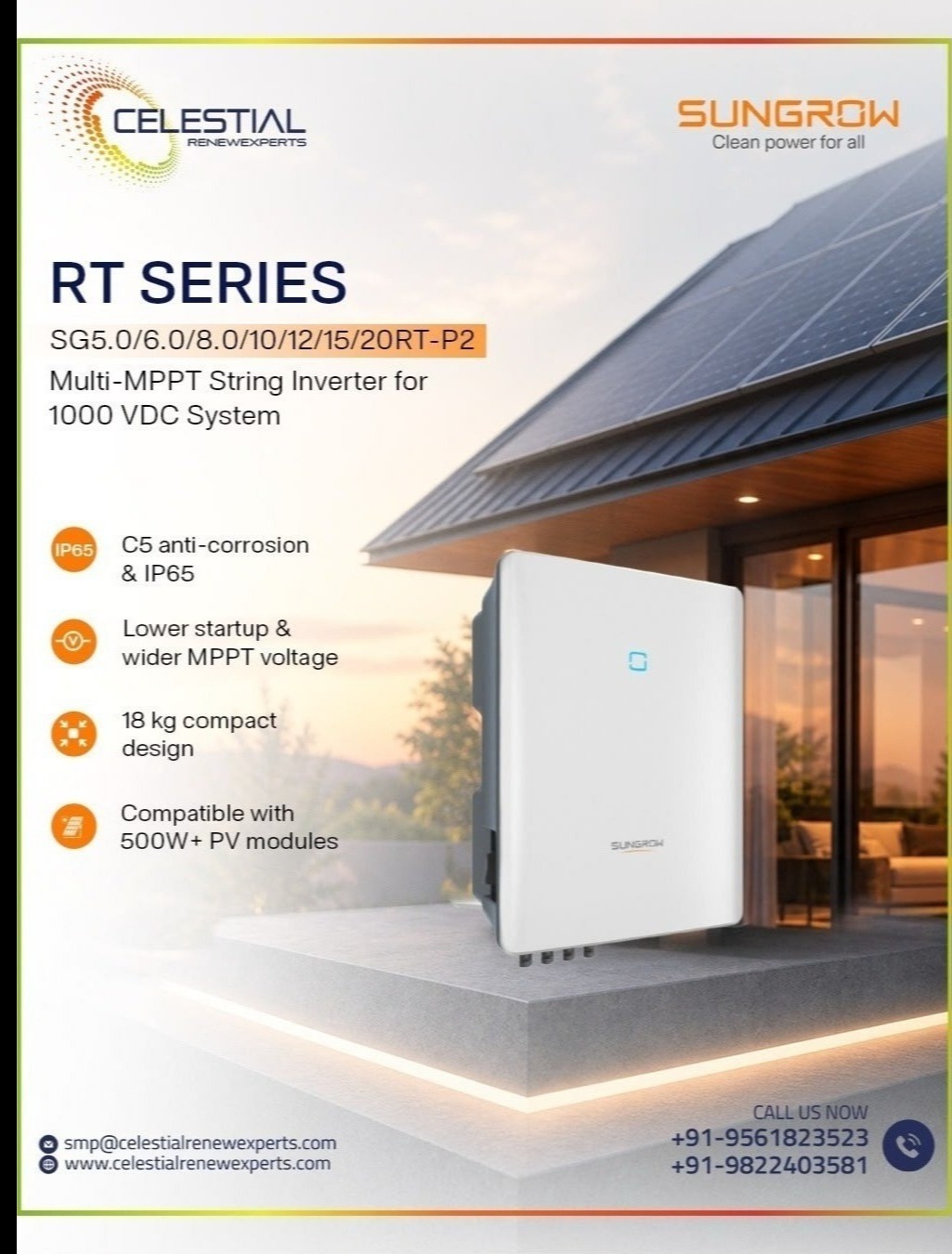
Selecting an inverter for a commercial solar project involves more than matching a capacity figure with the size of the PV array. Organisations comparing a Sungrow Solar PV Inverter in Pune should assess the equipment against actual site conditions, electrical architecture, monitoring expectations, and long-term operating requirements.
Commercial buildings and factories may have significantly different generation and consumption profiles. A warehouse with a large unobstructed roof, for example, presents different design conditions from a manufacturing plant with multiple roof levels and changing daytime loads.
Features to Compare
During technical evaluation, consider:
Input voltage and MPPT configuration
Rated and maximum operating parameters
Conversion efficiency
Protection functions
Monitoring and communication options
Environmental operating requirements
Installation arrangement
Service and maintenance considerations
The appropriate inverter architecture should be decided during system design.
Key Benefits of Project-Specific Selection
A correctly matched inverter can support better PV-array utilisation, system monitoring, fault identification, maintainability, and long-term operation.
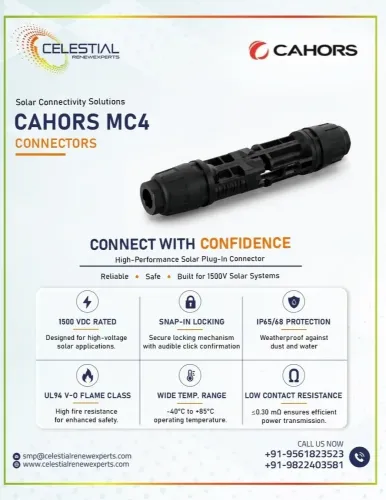
Another important consideration is component compatibility. Solar modules, strings, DC cables, connectors, protection devices, and inverter inputs should be engineered together. Selecting components independently based only on individual specifications can create avoidable design challenges.
For businesses in Pune, Maharashtra, local operating conditions should also influence decisions. Rooftop temperature, ventilation, dust exposure, installation accessibility, and electrical infrastructure all deserve attention.
Celestial Renewexperts LLP works with renewable-energy requirements in Pune where inverter evaluation can be incorporated into complete solar-system planning.
FAQs
Is the highest-capacity inverter always better?
No. Capacity should be matched to the PV array and project design.
What should commercial buyers compare besides efficiency?
They should evaluate input configuration, protections, monitoring, environmental suitability, system compatibility, and service requirements.
Can inverter choice affect monitoring?
Yes. Available monitoring and communication capabilities depend partly on the inverter and associated system configuration.