

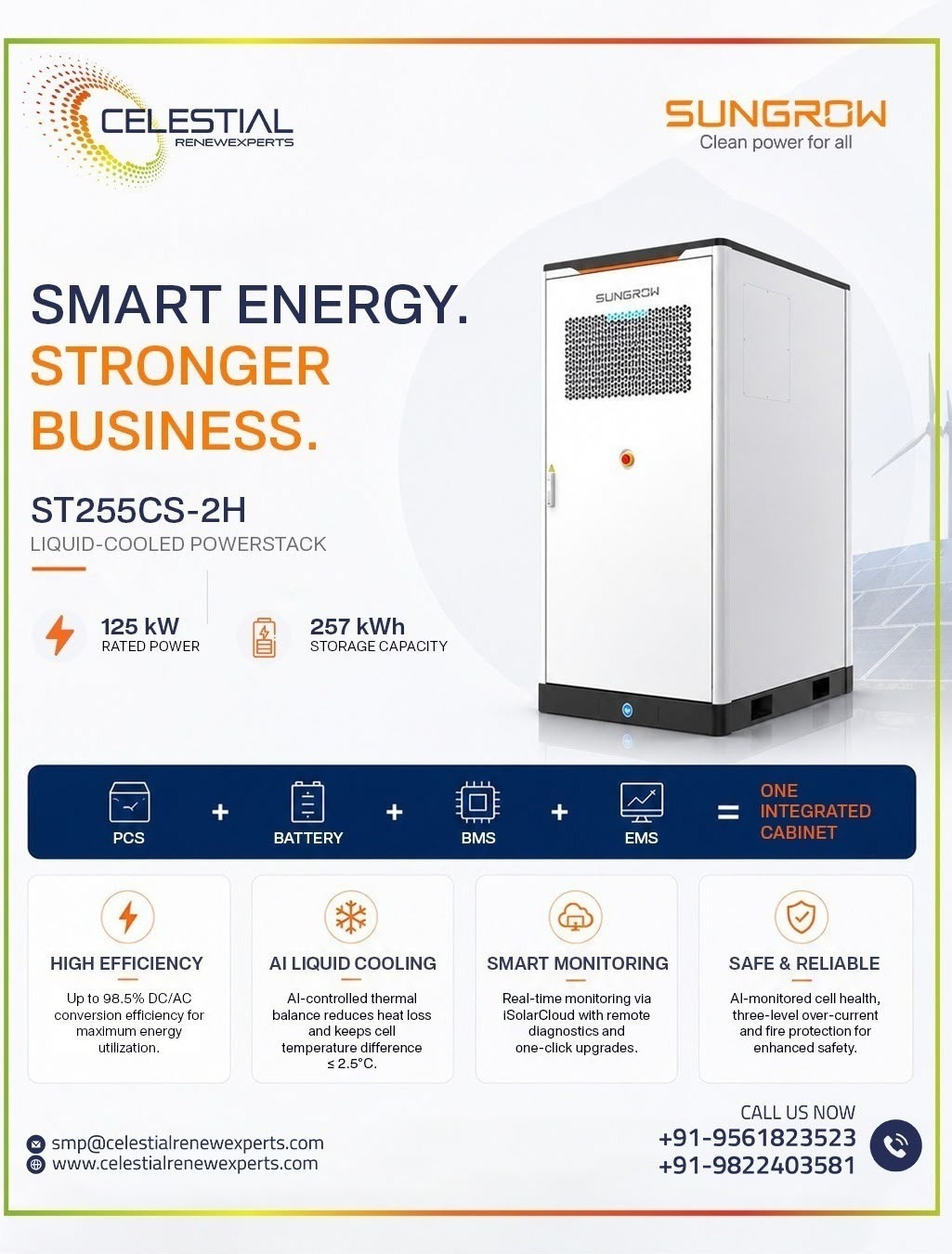
Solar generation and electricity consumption do not always occur at the same time. A facility may produce surplus solar electricity during daylight hours while experiencing significant demand later in the evening. A Battery Energy Storage System Sungrow in Hyderabad can form part of an energy strategy designed to store electricity and make it available according to the application's requirements.
Battery energy storage, commonly called BESS, combines batteries with power conversion, controls, monitoring, and safety systems. Its role can vary considerably depending on whether the installation is intended for renewable energy integration, peak management, grid support, or other applications.
Features
A modern battery energy storage solution may incorporate:
Battery modules or racks
Battery management systems
Power conversion equipment
Energy management controls
Thermal management
Monitoring capabilities
Electrical and system-level protection mechanisms
System configuration depends on required power in kW or MW, energy capacity in kWh or MWh, expected discharge duration, operating cycles, and site conditions.
Key Benefits
Energy storage can provide greater flexibility in how electricity is managed. For solar projects, storage may allow part of the generated electricity to be retained rather than used immediately.
Commercial and industrial facilities in Hyderabad should assess their load profile before deciding on storage capacity. Two businesses with similar electricity consumption may require very different BESS configurations because their peak demand and operating schedules differ.
Celestial Renewexperts LLP supports energy solution requirements in Hyderabad, where BESS evaluation can involve studying both present electricity usage and expected future requirements.
FAQs
Is BESS useful only with solar plants?
No. Battery storage can support multiple energy-management applications depending on the electrical system and project objectives.
How is BESS capacity selected?
Selection typically considers load profile, required backup or discharge duration, power requirement, available generation, and operating strategy.
Does a larger battery always provide better value?
Not necessarily. Oversizing can increase project cost without providing proportional operational benefits.